United Kingdom · since 1913
Aston Martin
A London hill-climb special that went through more than a dozen owners, from David Brown and Ford to a stock-market listing and Lawrence Stroll's consortium.
Models on record
Researched dossiers
- Founded
- 1913
- Founders
- Lionel Martin, Robert Bamford
- Headquarters
- Gaydon, Warwickshire, England
- Owned by
- Geely (Li Shufu / Zhejiang Geely)
- Status
- active
- Cars on record
- 1932–today
Marque summary from Wikipedia, CC BY-SA 4.0.
About Aston Martin
Aston Martin Lagonda Global Holdings PLC () is a British manufacturer of luxury sports cars and grand tourers. Its predecessor was founded in 1913 by Lionel Martin and Robert Bamford. Headed from 1947 by David Brown, it became associated with expensive grand touring cars in the 1950s and 1960s, and with the fictional character James Bond following his use of a DB5 model in the 1964 film Goldfinger.
Key people Lawrence Stroll · (Executive Chairman) · Adrian Hallmark · (Chief Executive Officer) · Marek Reichman
Who owned it
20 changes of control, 1913 to today.
- 1913–1924Lionel Martin and Robert Bamford (Bamford & Martin Ltd)Bamford left in 1920; Louis Zborowski provided funding from 1922. The company went bankrupt in 1924.
- 1924–1926Dorothea, Lady Charnwood, with her son John Benson on the boardBought the bankrupt company in 1924. It failed again in 1925; the works closed and Lionel Martin left in 1926.
- 1926–1929W. S. Renwick and A. C. Bertelli, with investors including Lady Charnwood (Aston Martin Motors Ltd)Ecurie Bertelli dates the purchase to October 1926, for £10,000, with Aston Martin Motors Ltd formed to continue production; Grace's Guide also gives 1926. English Wikipedia places the takeover in 1925.
- 1929–1932Aston Martin Ltd, chaired by Sidney WhitehouseFormed in September 1929 when Renwick & Bertelli Ltd was sold to Whitehouse. Lance Prideaux-Brune invested £8,000 in 1931.
- 1932–1933Lance Prideaux-BruneWikipedia and Grace's Guide say he rescued the company in 1932 and funded it for about a year.
- 1933–1947Sir Arthur Sutherland (Sutherland family)Ecurie Bertelli: Sutherland bought out Prideaux-Brune for £10,000 in March 1933 and became chairman, with his son Gordon as joint managing director. German Wikipedia puts Sutherland's arrival as main shareholder in late 1932.
- 1947–1972David Brown Ltd (Sir David Brown) · 100%German Wikipedia gives February 1947 and a price of £20,000. Lagonda was bought separately (1947 per English Wikipedia, 1948 per Grace's Guide) and run alongside; Tickford was bought in 1955.
- 1972–1975Company Developments (Birmingham investment group chaired by William Willson)Sold in February 1972 for £101 after Brown paid off debts reported at about £5 million. The company went into receivership at the end of 1974.
- 1975–1981Peter Sprague, George Minden and Jeremy Turner, later joined by Alan Curtis and Denis Flather (Aston Martin Lagonda (1975) Ltd)Bought from the receiver for about £1.05 million. Sources disagree on the month: March 1975 (Wikipedia, William Willson), April 1975 (Wikipedia, Aston Martin) and 'last June' (Motor Sport, September 1976).
- 1981–1983Pace Petroleum (Victor Gauntlett) and CH Industrials (Tim Hearley) · 50% eachEach bought a minority stake for £500,000 in 1980 (12.5% according to Wikipedia's Aston Martin article, 10% according to its Victor Gauntlett article) and they became joint 50/50 owners at the start of 1981.
- 1983–1987Peter Livanos (ALL Inc.), with Victor GauntlettGauntlett sold his holding to Livanos in 1983 (September, per Wikipedia), when ALL Inc., a venture with the Papanicolaou brothers, owned 55% of AML. In 1984 the Livanos family bought out the Papanicolaous and Gauntlett again held 25%; the deal valued the company at £2 million.
- 1987–1994Ford Motor Company · 75%Ford took its shareholding in September 1987.
- 1994–2007Ford Motor Company · 100%The 2018 IPO registration document says Ford went to 100% in 1994; Wikipedia's David Price article dates the purchase of the remaining 25% to July 1994. Wikipedia's Aston Martin article says Ford had full ownership by 1993. Part of Ford's Premier Automotive Group.
- 2007–2013Consortium of David Richards, John Sinders, Investment Dar and Adeem Investment · 92% (Ford kept about 8%)Agreed 12 March 2007. Ford's release values the company at £479 million ($925 million) and says Ford kept a £40 million investment; Wikipedia's Premier Automotive Group article calls that stake 8%. Wikipedia's Aston Martin article gives £475 million. Prodrive itself had no financial involvement; individual consortium stakes were not found.
- 2013–2018Investindustrial, alongside the 2007 shareholders · 37.5%Deal signed 6 December 2012 for a £150 million capital increase. The IPO registration document records Investindustrial V's subsidiaries acquiring 1,142,696 shares (37.5%) in 2013; the company's April 2014 results release says Investindustrial joined Primewagon, Adeem and the other shareholders in April 2013.
- 2013–nowDaimler AG, later Mercedes-Benz AG · 4.9% non-voting (2013–14); 11.85% at end-2020; about 9.4% in 2023Engine and technology agreement finalised December 2013 with a non-voting stake of up to 5% (4.9% per the IPO document). Under an October 2020 agreement the holding could rise in stages to a maximum of 20%; it was 11.85% at 31 December 2020, about 11.7% before the 2022 rights issue and about 9.7% after it, and about 9.4% in June 2023.
- 2018–2020Public shareholders (Aston Martin Lagonda Global Holdings plc, London Stock Exchange)Listed 3 October 2018.
- 2020–nowYew Tree Consortium (led by Lawrence Stroll), largest shareholder of the listed company · 16.7% agreed (Jan 2020); 25% (Apr 2020); 19% (Sep 2022); 26.23% (Sep 2023); 27.67% (Mar 2025); 33.13% (May 2025)Investment of £182 million for 16.7% announced 31 January 2020. The company says Yew Tree became largest shareholder with 25% on completion of the capital raise in April 2020. About 21% after Geely's May 2023 transaction.
- 2022–nowPublic Investment Fund (Saudi Arabia) · 18.7% (Sep 2022); about 18% (May 2023)Investment announced 15 July 2022 alongside a rights issue; the company put PIF's stake at 18.7% on completion of the £654 million capital raise on 30 September 2022. Wikipedia gives 16.7%. PIF also controls Lucid, which received about 3.7% of Aston Martin in 2023 under a supply agreement.
- 2022–nowGeely (Li Shufu / Zhejiang Geely) · 7.6% (Sep 2022); about 17% (2023)7.6% disclosed 30 September 2022. A May 2023 purchase from Yew Tree members plus new shares took it to about 17% (17.6% in June 2023).
Chief executives
Sales, revenue and rank
Vehicles sold or built
What the figure counts changes 10 times. Read each numbered stretch on its own.
- 1982Production cars built in the year (Wikipedia, citing Victor Gauntlett's obituary); an all-time low
- 1995Cars produced in the year, described as a record (Wikipedia)
- 2003–2006Worldwide sales, as compiled by AutoZine (secondary source)
- 2007Cars sold worldwide (Wikipedia, citing the Financial Times); the 2018 IPO document says only that the peak in 2007 was over 7,000; AutoZine lists 6,850
- 2008–2010Worldwide sales, as compiled by AutoZine (secondary source)
- 2011–2013Global retail volumes, 'circa 4,200' as stated by Aston Martin Holdings (UK) Ltd (approximate); AutoZine gives the same figure
- 2014Worldwide sales, as compiled by AutoZine (secondary source); Wikipedia, citing the Financial Times, gives 3,500
- 2015–2016Wholesale volumes, cars sold to dealers including specials (company: 'produced and sold')
- 2017Wholesale volumes including 270 specials; retail sales that year were 5,117
- 2018–2019Wholesale volumes including specials
- 2020–2025Wholesale volumes including 43 specials; retail sales 4,150
Revenue
GBP of the day, not adjusted for inflation
What the figure counts changes 1 times. Read each numbered stretch on its own.
- 2011–2017Aston Martin Holdings (UK) Limited, full year to 31 December 2011, as stated in the company's results release (described as the highest since 2008)
- 2018–2025Aston Martin Lagonda Global Holdings plc, consolidated, calendar year (excludes £20m of consultancy income reclassified as other income)
Best-selling model each year
| Year | Model | Units | Market | All vehicles |
|---|---|---|---|---|
| 2022 | DBX | 3,219 | worldwide wholesales | 6,412 |
| 2021 | DBX | 3,001 | worldwide wholesales | 6,178 |
| 2020 | DBX | 1,516 | worldwide wholesales | 3,394 |
Sources for these figures (44)
- Aston Martin — Wikipedia
- Aston Martin (German-language article, with year-by-year sales table) — Wikipedia
- Aston Martin — Grace's Guide to British Industrial History
- Pre-war Aston Martin History, Birth to 1932 — Ecurie Bertelli
- William Willson (businessman) — Wikipedia
- Aston Martin of Newport Pagnell (September 1976) — Motor Sport
- Miscellany, April 1977 — Motor Sport
- Victor Gauntlett — Wikipedia
- Walter Hayes — Wikipedia
- John Oldfield (engineer) — Wikipedia
- David Price (engineer) — Wikipedia
- Ford press release, 30 May 2000: Bob Dover, chairman of Aston Martin/Lagonda, to head Land Rover — Ford Motor Company (hosted by The Auto Channel)
- Ulrich Bez — Wikipedia
- Premier Automotive Group — Wikipedia
- Ford announces agreement to sell Aston Martin (12 March 2007), exhibit 99 to Form 8-K — Ford Motor Company (SEC EDGAR)
- Ford sells major stake in Aston Martin — F&I and Showroom
- Aston Martin: manufacturer profile and sales figures — AutoZine (Mark Wan)
- Aston Martin Holdings (UK) Limited Full Year Results 2011 (20 April 2012) — Aston Martin (hosted by The Auto Channel)
- Aston Martin Holdings (UK) Limited Full Year Results 2012 — Aston Martin (PR Newswire)
- Aston Martin Holdings (UK) Limited Full Year Results 2013 (28 April 2014) — Aston Martin (PR Newswire)
- Aston Martin Lagonda Issues £200 Million Funding For Product Expansion (30 April 2015; includes FY2014 results) — Aston Martin Lagonda (distributed by Pressat)
- Aston Martin reports Q4 and full year 2016 results (28 February 2017) — Aston Martin media
- Aston Martin delivers record sales growth in 2017 (4 January 2018) — Aston Martin media
- Aston Martin Holdings (UK) Limited, Registration Document, 28 August 2018 (IPO) — Aston Martin Lagonda (via LexisNexis Market Tracker)
- Aston Martin Lagonda Annual Report 2018 — Aston Martin Lagonda Global Holdings plc
- Aston Martin Lagonda reports 9% decline in revenue for 2019 (27 February 2020) — Kalkine Media
- Preliminary results for the 12 months to 31 December 2020 — Aston Martin Lagonda Global Holdings plc (RNS via Investegate)
- Preliminary results for the 12 months to 31 December 2021 — Aston Martin Lagonda Global Holdings plc (RNS via Investegate)
- Preliminary results for the 12 months to 31 December 2022 — Aston Martin Lagonda Global Holdings plc (RNS via Investegate)
- Preliminary results for the twelve months ended 31 December 2023 — Aston Martin Lagonda Global Holdings plc (RNS via Investegate)
- Preliminary results year ended 31 December 2024 — Aston Martin Lagonda Global Holdings plc (RNS via Investegate)
- Preliminary results FY2025 (25 February 2026) — Aston Martin Lagonda Global Holdings plc (RNS via Investegate)
- Proposed new equity financing and investment (15 July 2022) — Aston Martin Lagonda Global Holdings plc (RNS via Investegate)
- Successful completion of £654m capital raise (30 September 2022) — Aston Martin Lagonda Global Holdings plc (RNS via Investegate)
- China's Geely buys 7.6% stake in Aston Martin (30 September 2022, Reuters) — BusinessDay
- Substantial investment in Aston Martin by Geely (18 May 2023) — Aston Martin Lagonda Global Holdings plc (RNS via Investegate)
- Aston Martin Lagonda and Mercedes-Benz AG (26 June 2023) — Aston Martin Lagonda Global Holdings plc (RNS via Investegate)
- Aston Martin Lagonda and Lucid Group, Inc. (26 June 2023) — Aston Martin Lagonda Global Holdings plc (RNS via Investegate)
- Increased investment by Yew Tree Consortium (29 September 2023) — Aston Martin Lagonda Global Holdings plc (RNS via Investegate)
- Proposed investment by Yew Tree Consortium (31 March 2025) — Aston Martin Lagonda Global Holdings plc (RNS via Investegate)
- Result of general meeting and issue of equity (7 May 2025) — Aston Martin Lagonda Global Holdings plc (RNS via Investegate)
- Appointment of new Chief Executive Officer and Chief Technical Officer (4 May 2022) — Aston Martin Lagonda Global Holdings plc (RNS via Investegate)
- Appointment of new Chief Executive Officer (22 March 2024) — Aston Martin Lagonda Global Holdings plc (RNS via Investegate)
- Confirmation of start date of new Chief Executive Officer (24 July 2024) — Aston Martin Lagonda Global Holdings plc (RNS via Investegate)
- Annual units are not one series. 2015–2025 are company wholesale volumes (cars invoiced to dealers, including specials) from the 2018 IPO registration document, the 2018 annual report and the full-year results releases for 2020–2025; each release also gives the prior year, and the figures agree where they overlap. 2011, 2012 and 2013 are the company's approximate ('circa') global retail volumes. 2003–2005, 2008–2010 and 2014 come from AutoZine, a secondary compilation (German Wikipedia carries the same table); AutoZine marks 2010 as approximate. 2006 and 2007 use contemporary round figures (see the conflict notes). 1982 and 1995 are isolated production figures from Wikipedia.
- Wholesale versus retail: Aston Martin reported retail volumes as well as wholesales until 2020 (2017: 5,117 retail vs 5,098 wholesale; 2019: 6,136 retail vs 5,862 wholesale; 2020: 4,150 retail vs 3,394 wholesale) and then stopped publishing retail units from FY2021. The chart series uses wholesales throughout 2015–2025.
- Conflict, 2006–2008: AutoZine gives 6,500 (2006), 6,850 (2007) and 5,800 (2008). The company's 2018 IPO document says sales averaged about 6,800 a year over 2006–2008 with a peak of over 7,000 in 2007, which AutoZine's figures do not fit. Wikipedia (citing the Financial Times) gives 7,300 for 2007 and a contemporary report of the 2007 sale gives 'a record 7,000' for 2006; those are used for 2006 and 2007. AutoZine's 2008 figure is kept but should be treated with care.
- Conflict, 2012 and 2014: AutoZine gives 3,500 for 2012 against the company's 'circa 3,800' retail figure (company used). For 2014 AutoZine gives 3,661 and Wikipedia (citing the Financial Times) 3,500; no company figure was found, so AutoZine's is used and flagged.
- Minor conflict: AutoZine lists 6,182 for 2021; the company's results give 6,178 wholesales (used). AutoZine's 2015–2020 and 2022–2025 figures match the company's wholesales exactly.
- Revenue: 2011 (£506.8m) is from the company's 2011 results release; 2013 and 2014 are the rounded totals stated in company releases for Aston Martin Holdings (UK) Limited (£519m and £468m). 2015–2017 are from the IPO registration document (Aston Martin Holdings (UK) Limited group); 2018 onward are Aston Martin Lagonda Global Holdings plc. Calendar years throughout. 2019 uses the restated £980.5m from the 2020 results (prior-period adjustment for US variable marketing expense); the figure originally reported in February 2020 was £997.3m. 2018 excludes £20m of consultancy income reclassified to other income.
- No revenue was sourced for 2012 or before 2011. The 2012 results release gives only quarterly growth and adjusted EBITDA (£69.3m), not full-year revenue. Companies House accounts for Aston Martin Lagonda Ltd and Aston Martin Holdings (UK) Ltd would fill 2007–2012 but were not read in this pass; note that operating-company and holding-company turnover may differ.
- Best sellers are given only where the company's model split makes one model clearly the largest: DBX in 2020 (1,516), 2021 (3,001) and 2022 (3,219), when 'Sports' was the Vantage alone and 'GT' combined DB11 and DBS. From 2023 the company merges Vantage, DB11, DB12, DBS and Vanquish into one 'Sport/GT' line (2023: 3,530 against DBX 2,939), so no single best seller can be identified for 2023–2025, nor for 2015–2019.
- No rank is given: Aston Martin is too small to appear in OICA manufacturer rankings and no source ranked it.
- 1920s–1930s ownership: English Wikipedia places the Renwick and Bertelli takeover in 1925; Grace's Guide and Ecurie Bertelli give 1926 (Ecurie Bertelli: October 1926, £10,000), used here. Sutherland's purchase is dated March 1933 by Ecurie Bertelli and 'late 1932' by German Wikipedia; English Wikipedia and Grace's Guide say Prideaux-Brune carried the company for about a year from 1932. The 1929–1932 Whitehouse period rests on Ecurie Bertelli alone.
- 1975 sale month conflicts: March (Wikipedia, William Willson), April (Wikipedia, Aston Martin) and June (Motor Sport, September 1976). Price about £1.05 million in all three.
- 1980 stakes: Wikipedia's Aston Martin article says Pace bought 12.5% for £500,000; its Victor Gauntlett article says 10% for £500,000.
- Ford: 75% in September 1987. Full ownership is 1994 in the company's IPO document (July 1994 per Wikipedia's David Price article) but 1993 in Wikipedia's Aston Martin article; 1994 used.
- 2007 sale price: Ford's release values the business at £479 million ($925 million) including Ford's retained £40 million investment; Wikipedia's Aston Martin article gives £475 million. Individual stakes of Richards, Sinders, Investment Dar and Adeem were not found.
- Post-2018 stakes are taken from company announcements where possible. Wikipedia's figures differ in places (PIF 16.7% vs the company's 18.7% at completion of the 2022 raise; Yew Tree '28.29% in December 2022' and '26.23% in September 2023', the latter matching the company). Mercedes-Benz's stake was 11.85% at end-2020 (company) and was diluted to about 9.4% by June 2023; later Mercedes, PIF and Geely percentages after the 2024 and 2025 placings were not confirmed.
- Leaders: no chief executive is recorded between Bez (to December 2013) and Palmer (from September 2014); the interim arrangement was not found. Bob Dover's start in 1997 rests on Wikipedia's David Price article. Before 1947 the top post is uncertain: Bertelli was technical director and co-owner but Whitehouse (from 1929) and Sutherland (from 1933) were chairmen; Gordon Sutherland was joint managing director from 1933. Penny Hughes was non-executive chair before Stroll; her dates were not confirmed.
- Hallmark's start: the company confirmed 1 September 2024; Wikipedia gives 1 October 2024 (the 'no later than' date in the March 2024 announcement). Palmer's departure: 25 May 2020 per the company, 26 May per Wikipedia.
Researched dossiers
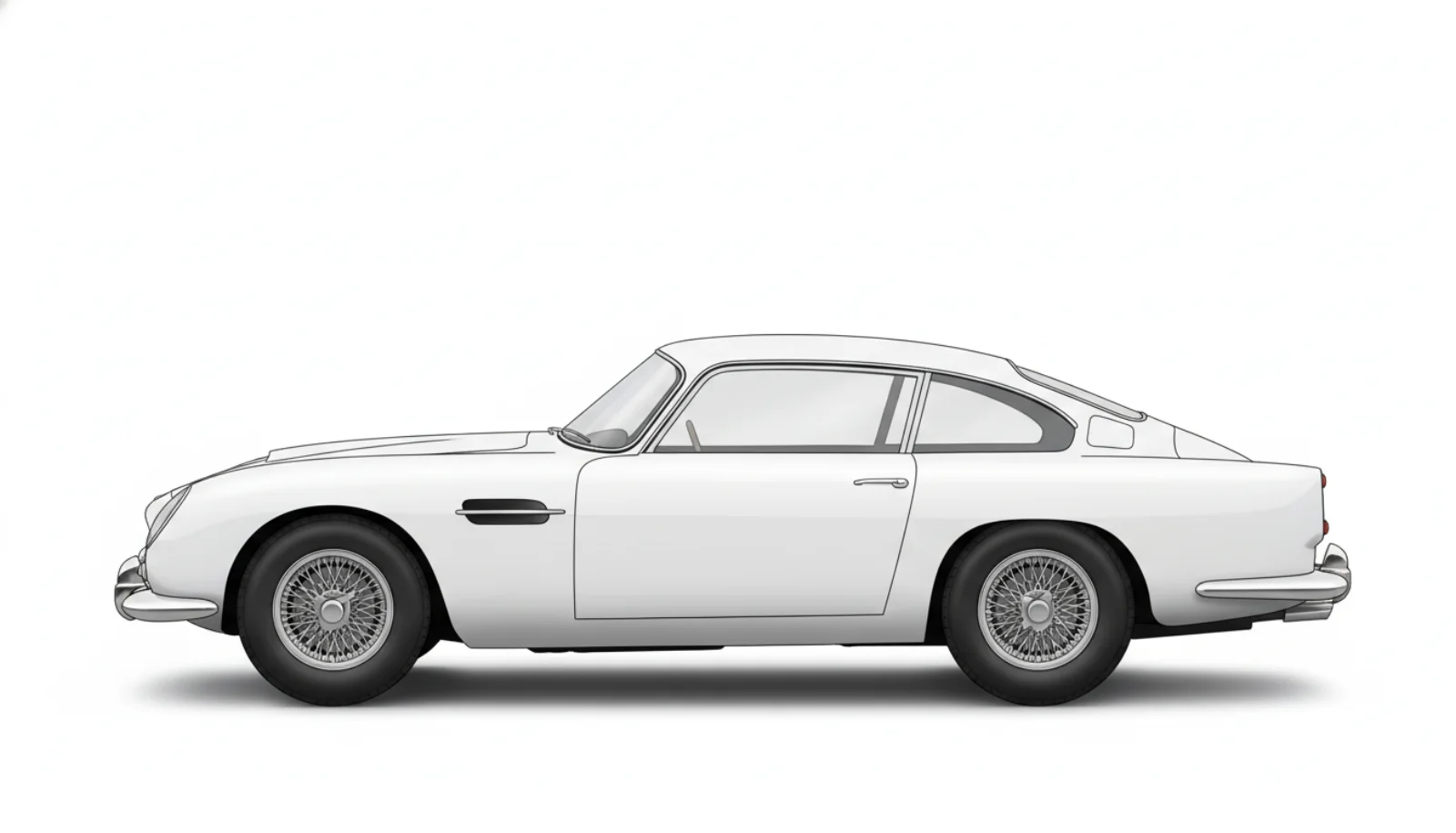
Every model
Models in production each year
1930s
2 launched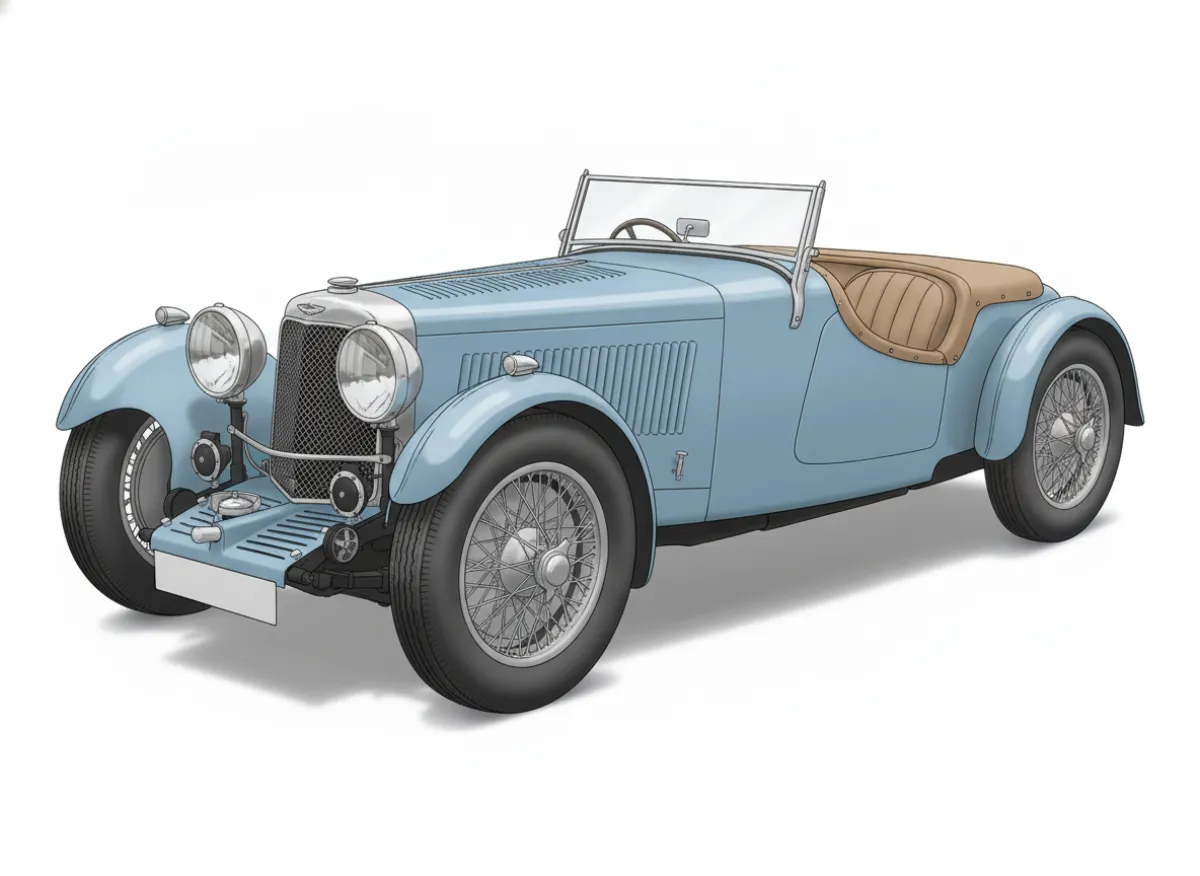
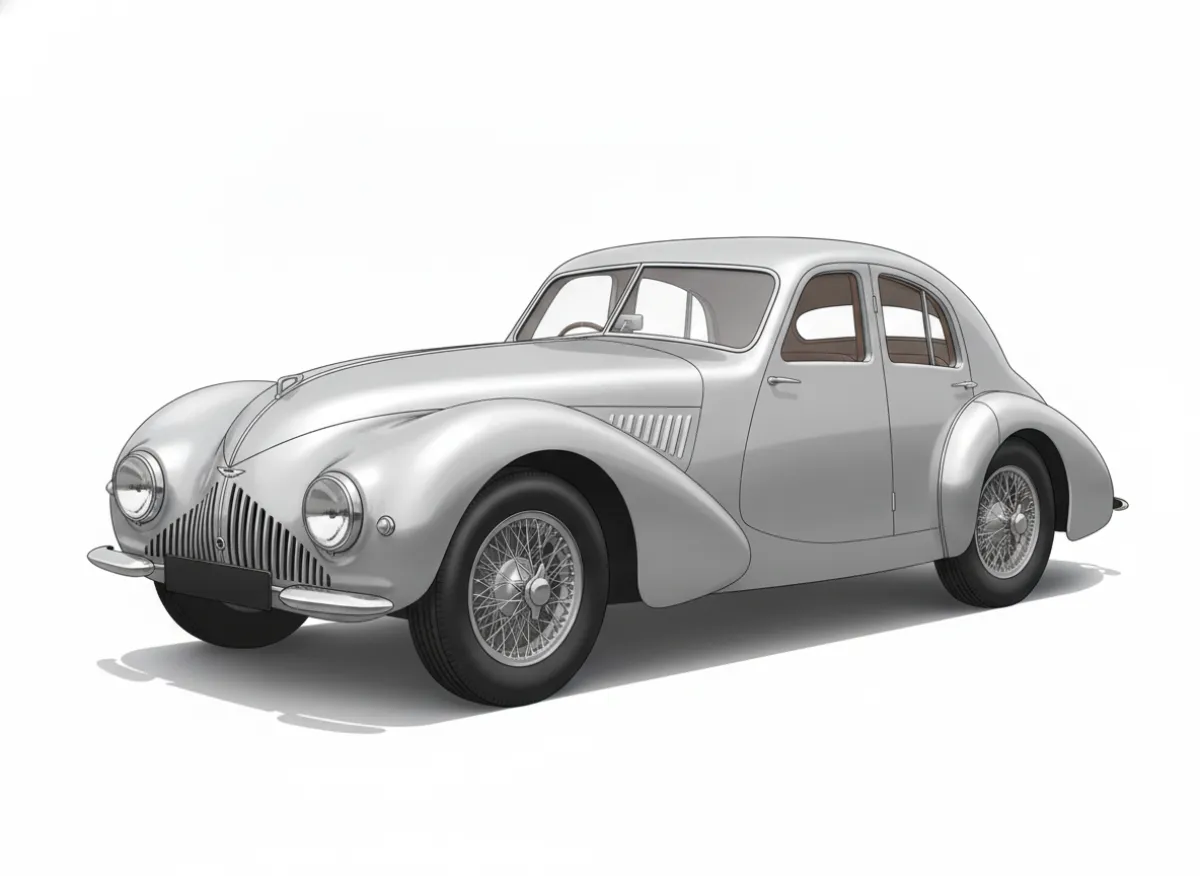
1940s
1 launched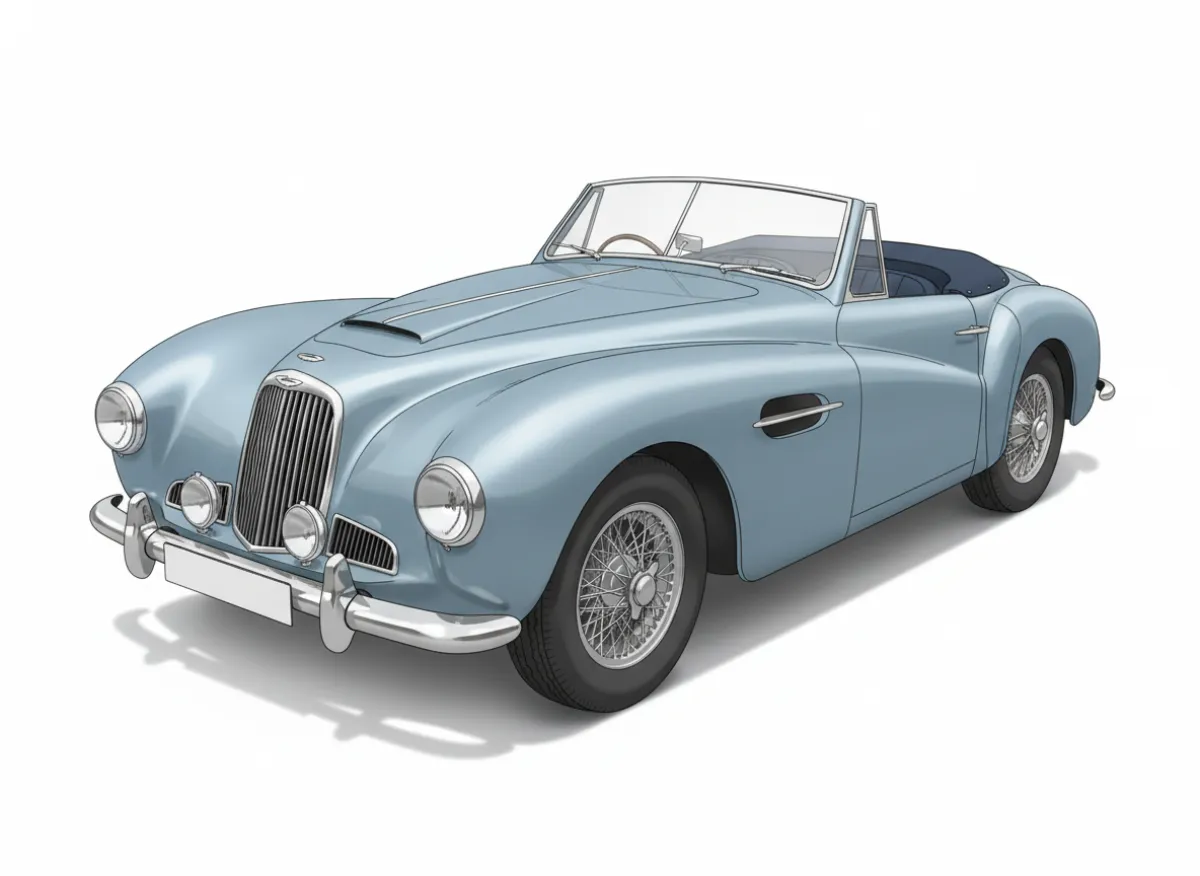
1950s
4 launched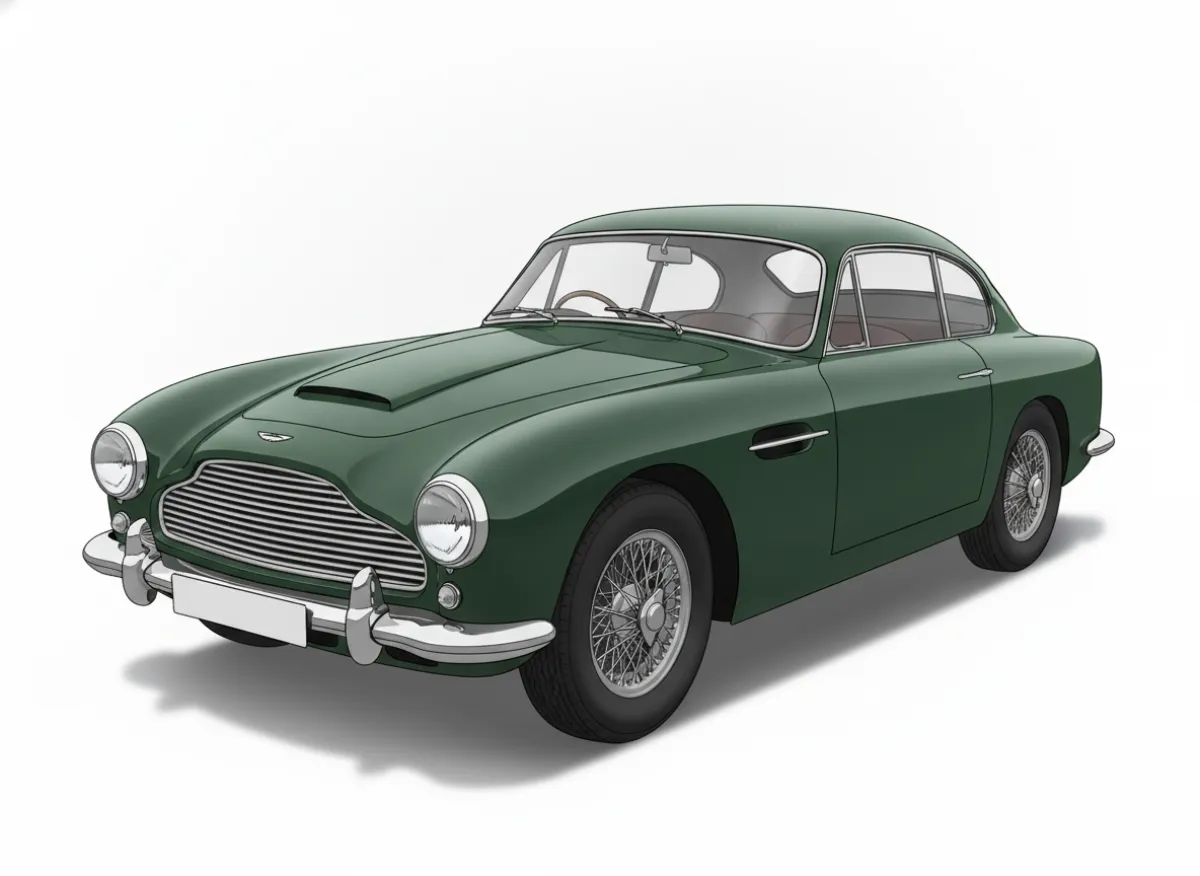
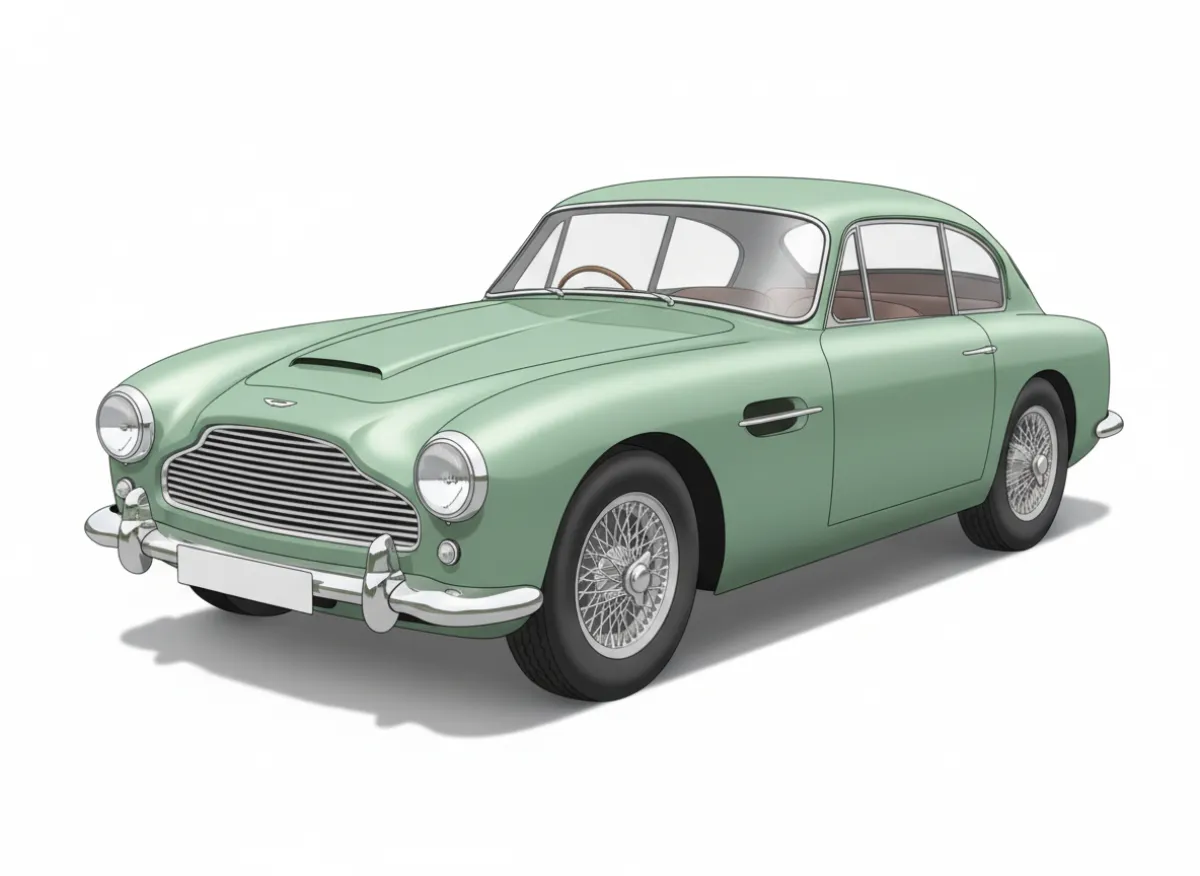
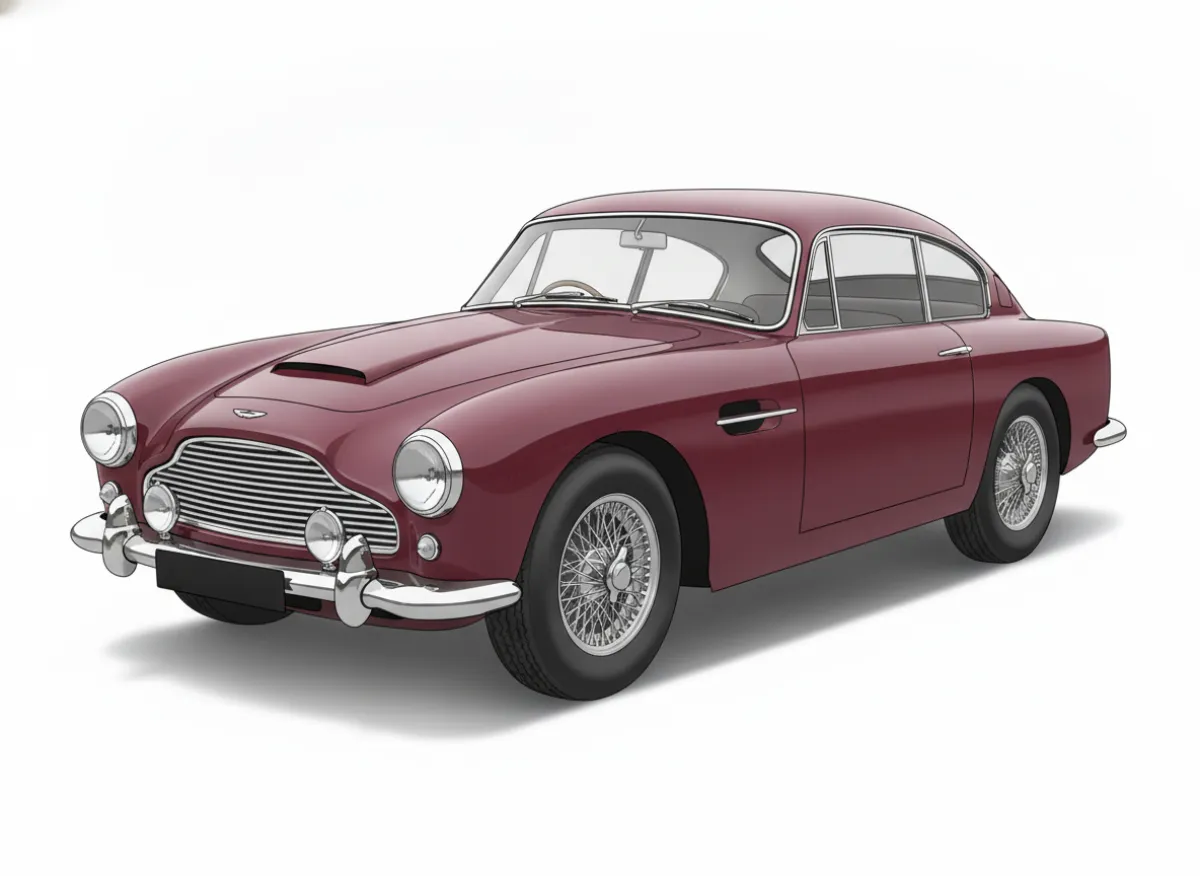
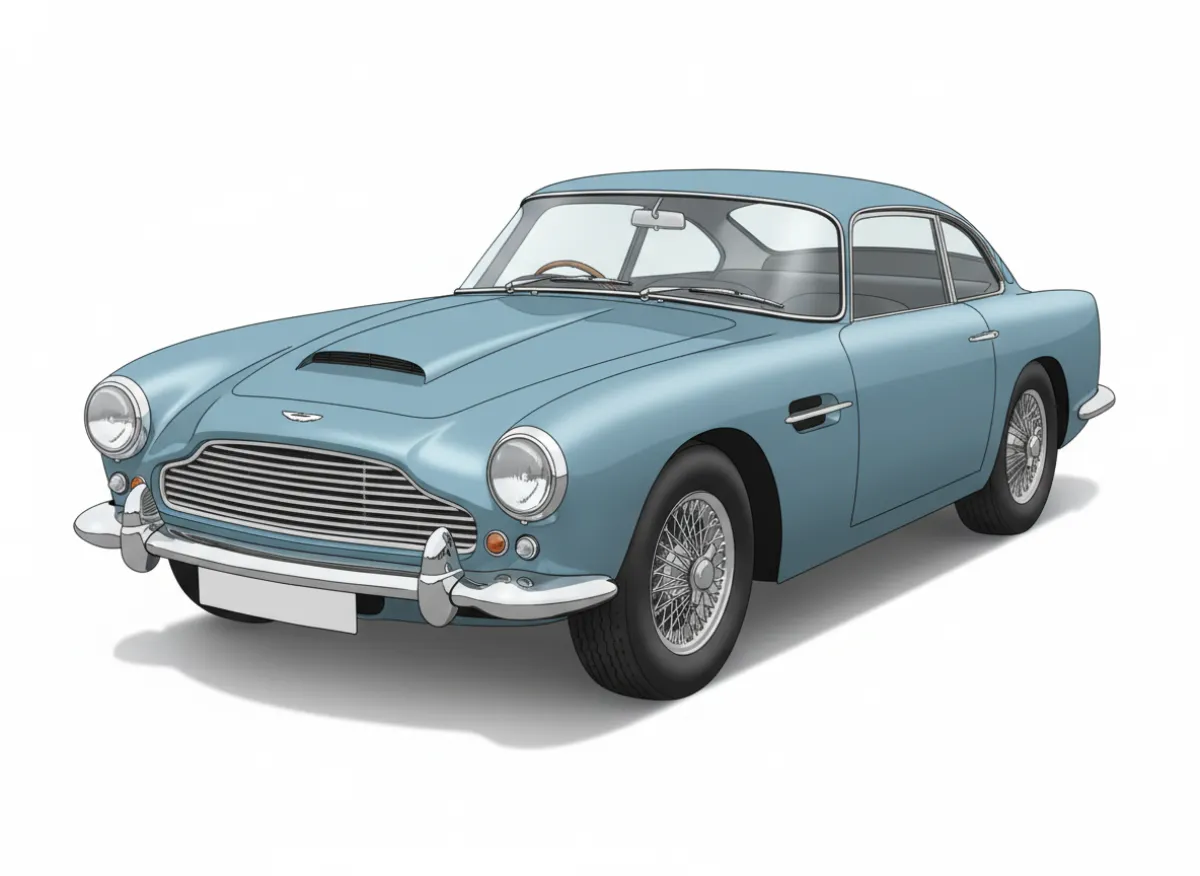
1960s
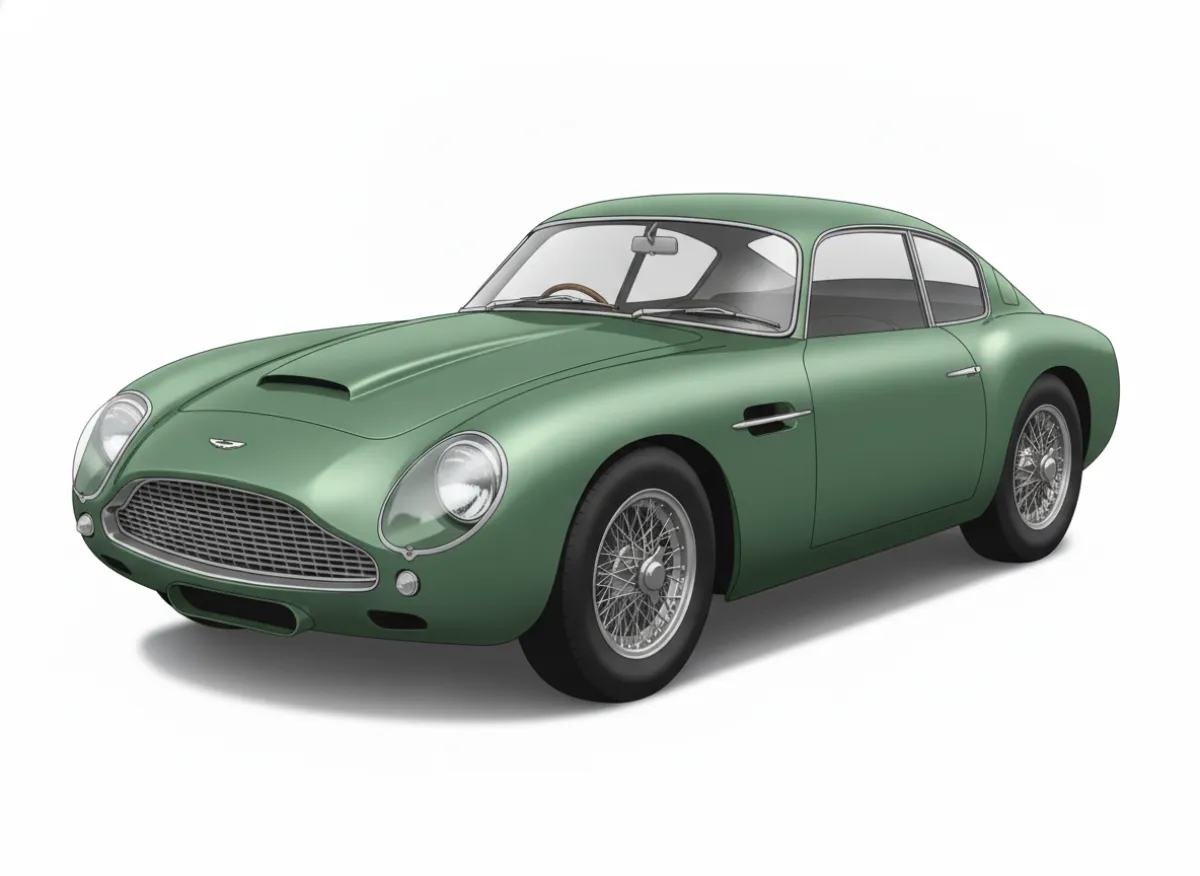
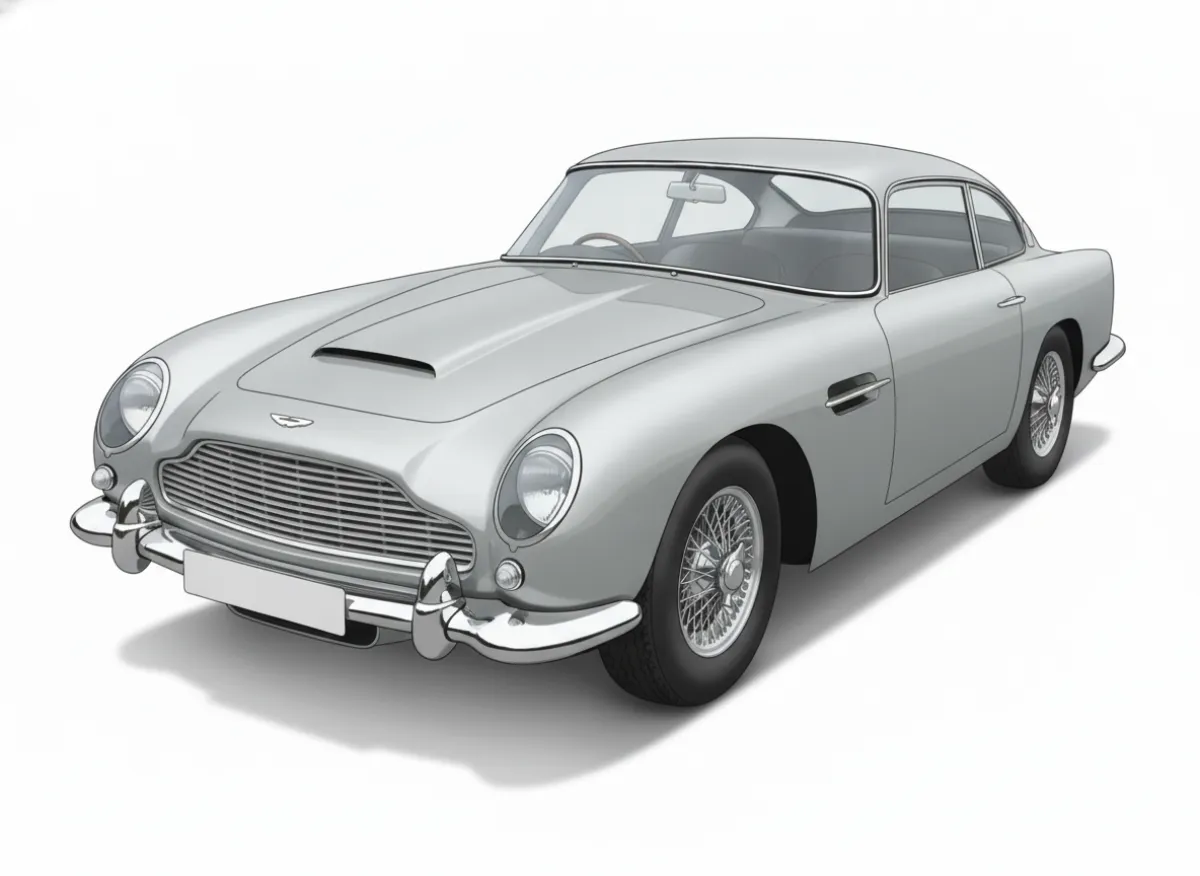
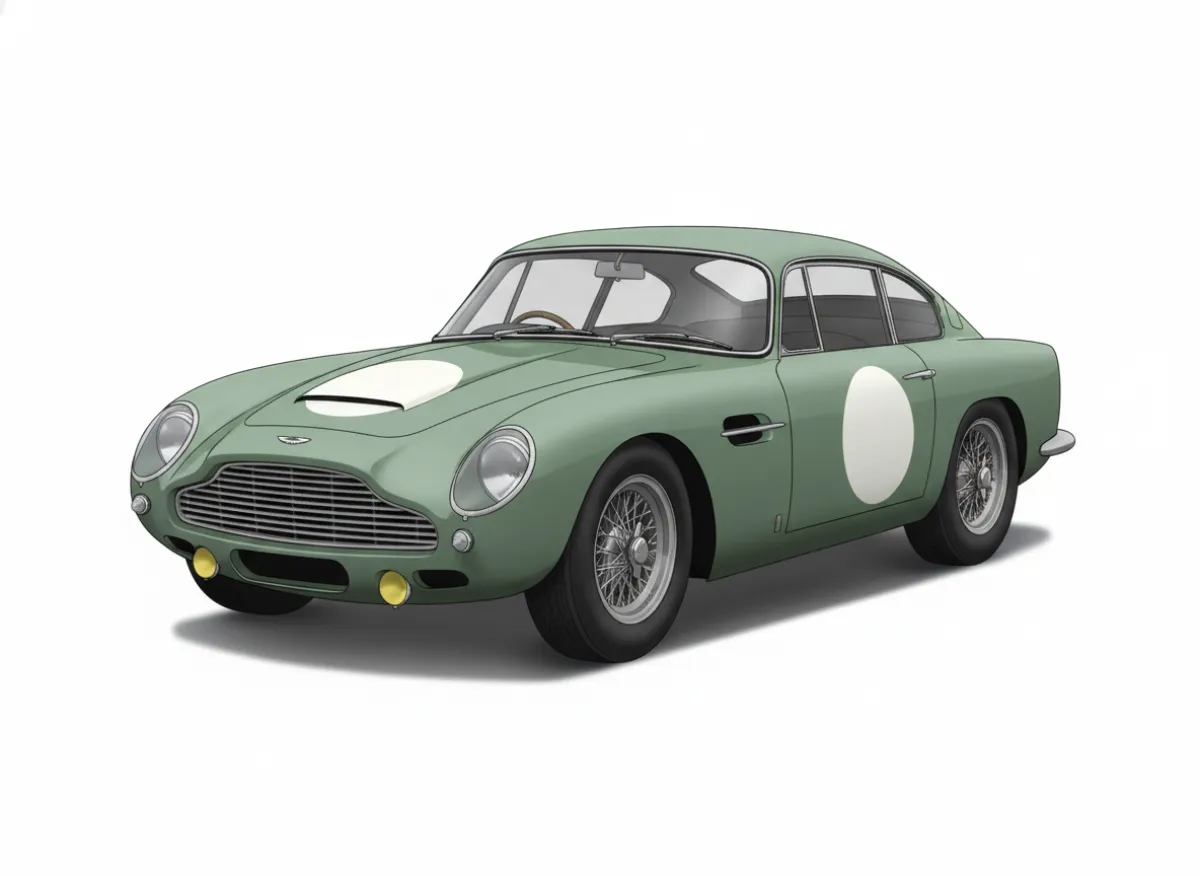
8 launched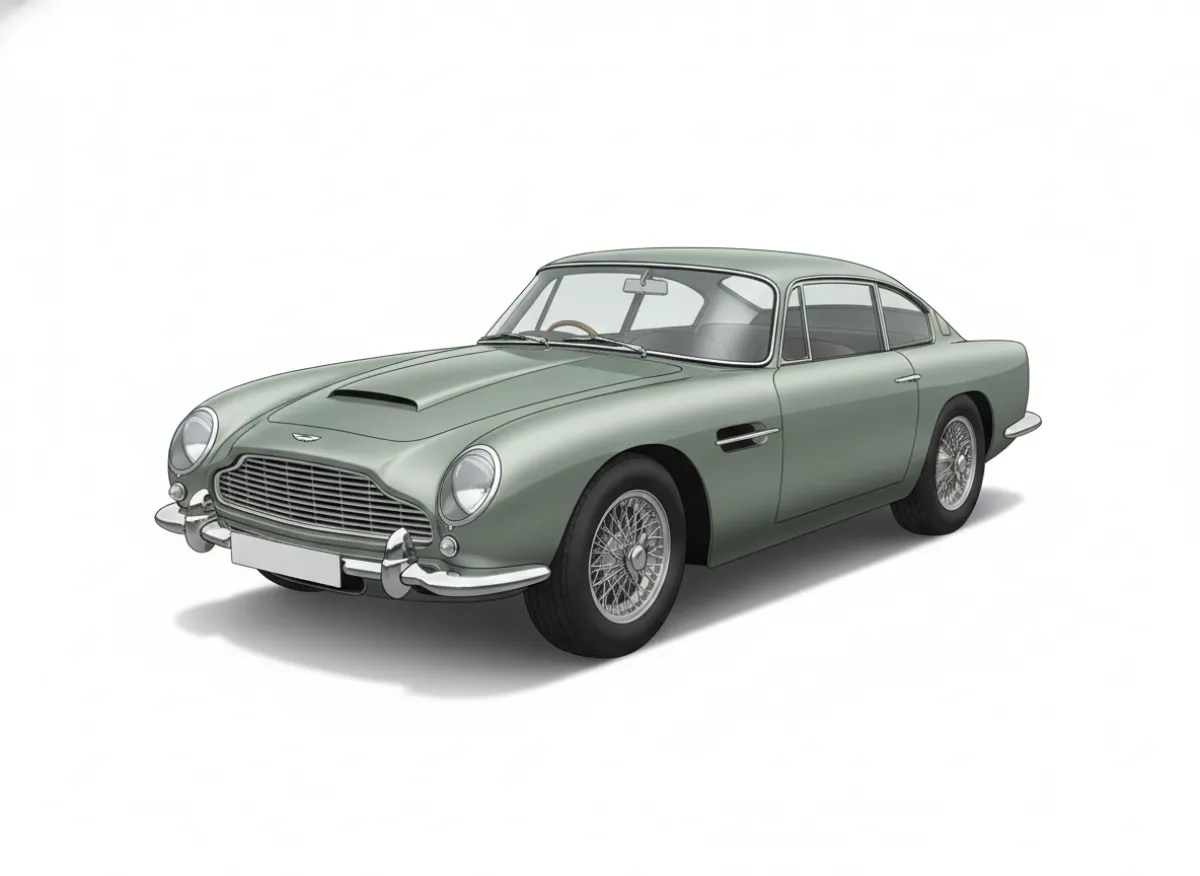
1980s
2 launched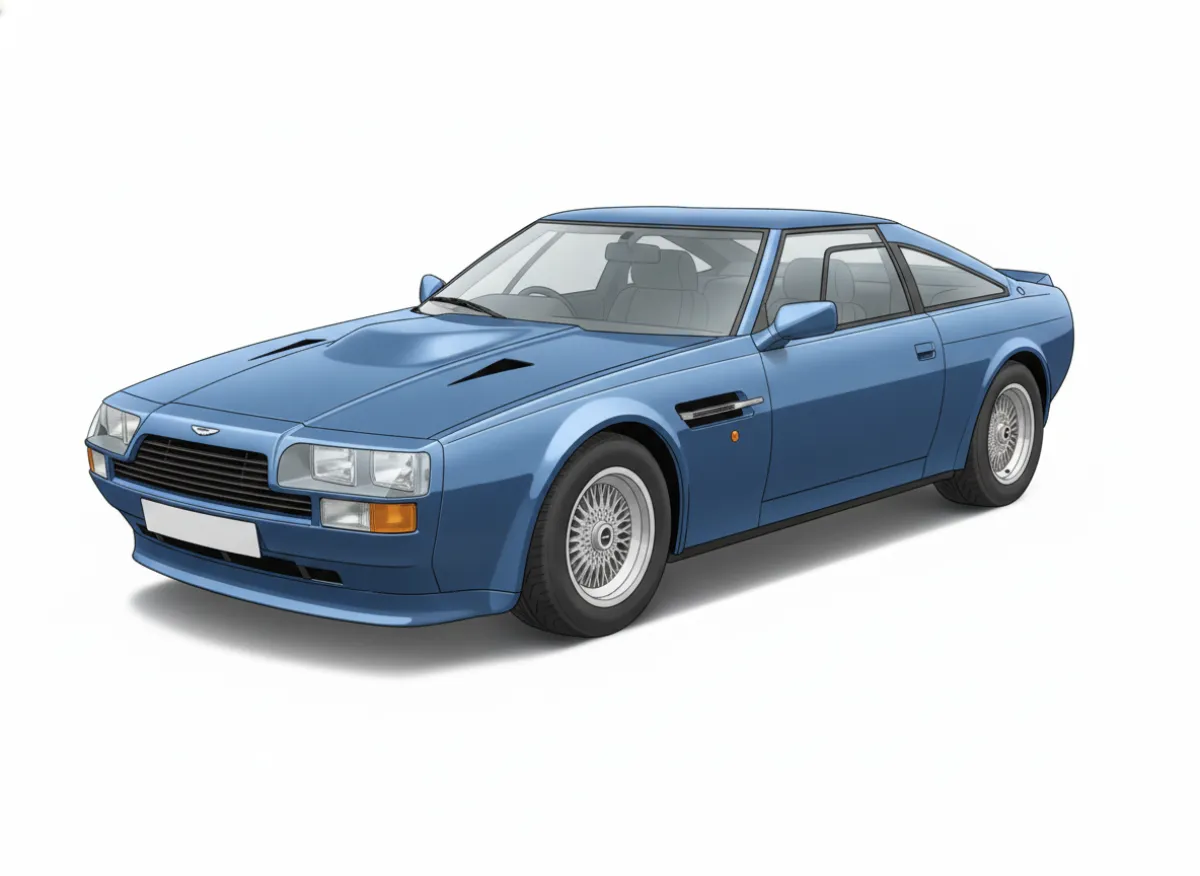
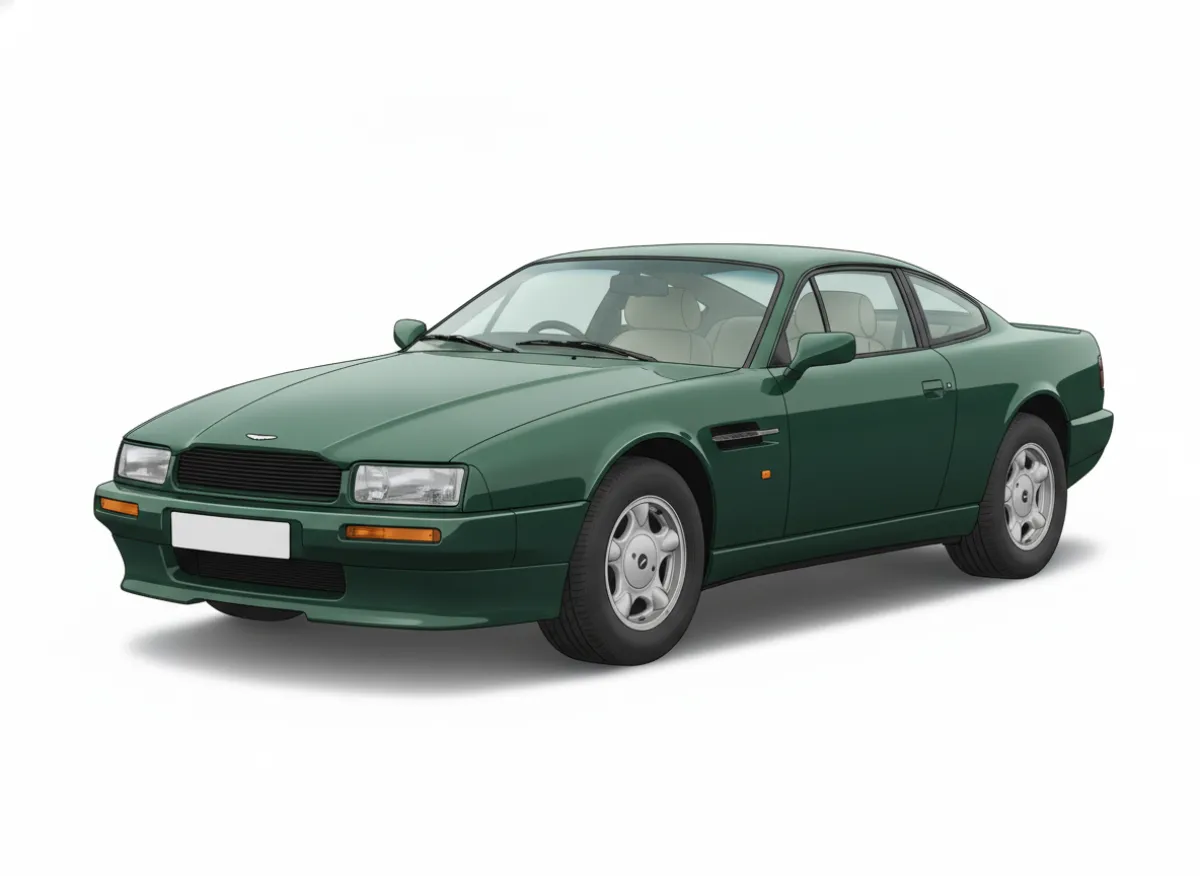
1990s
2 launched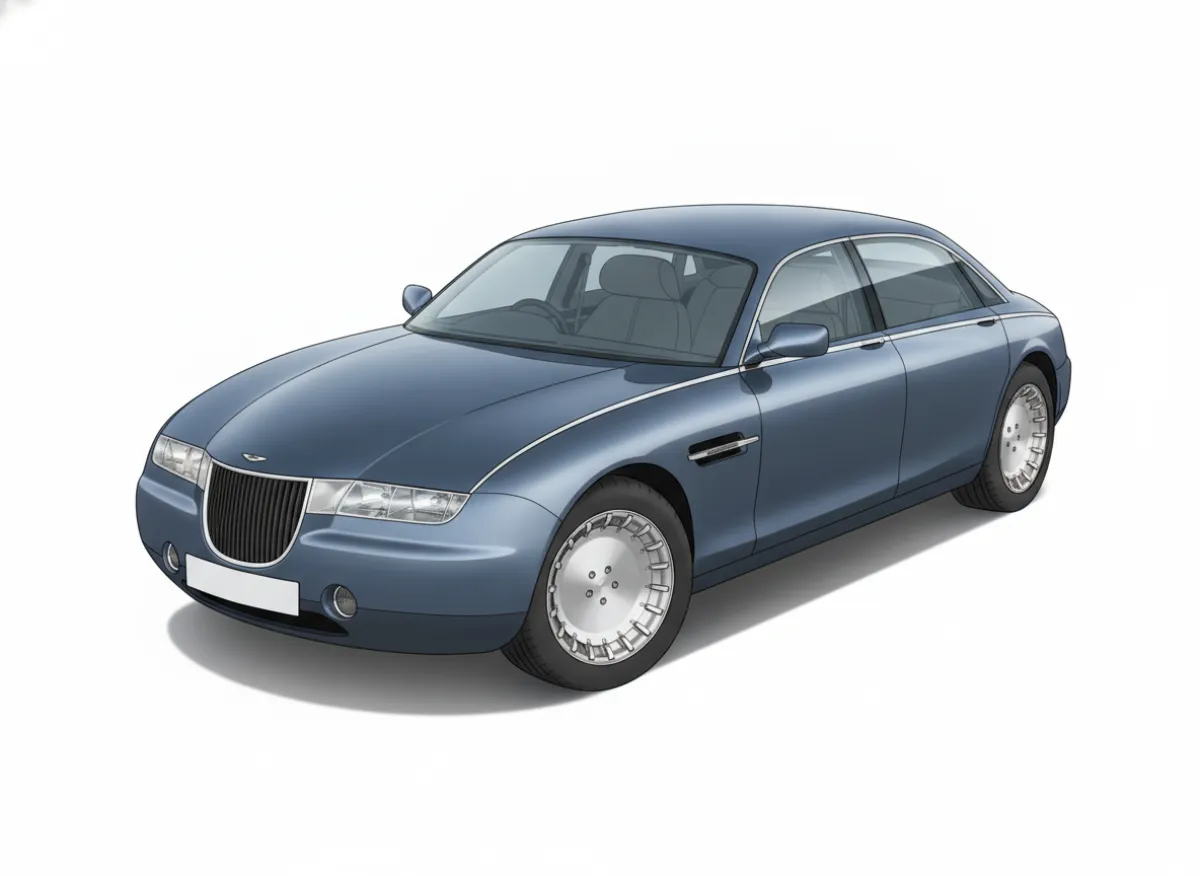
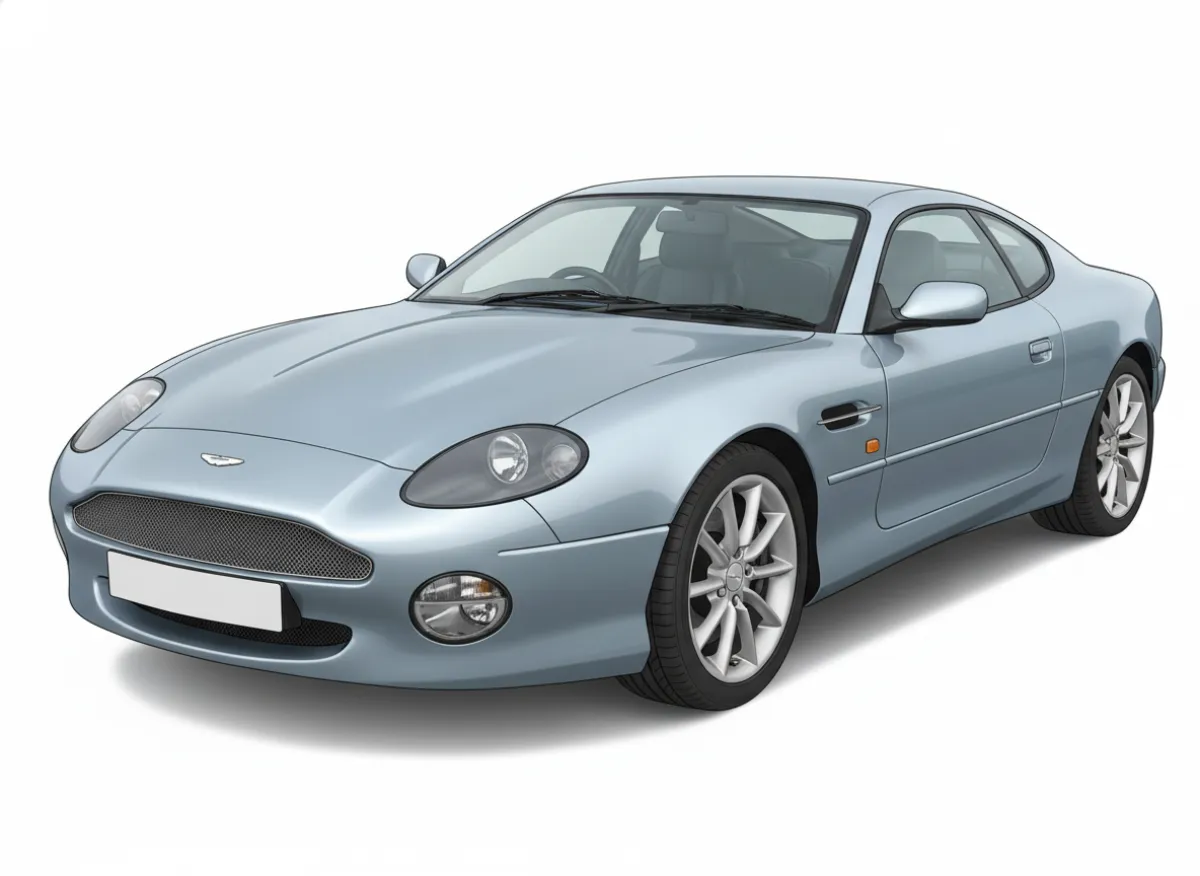
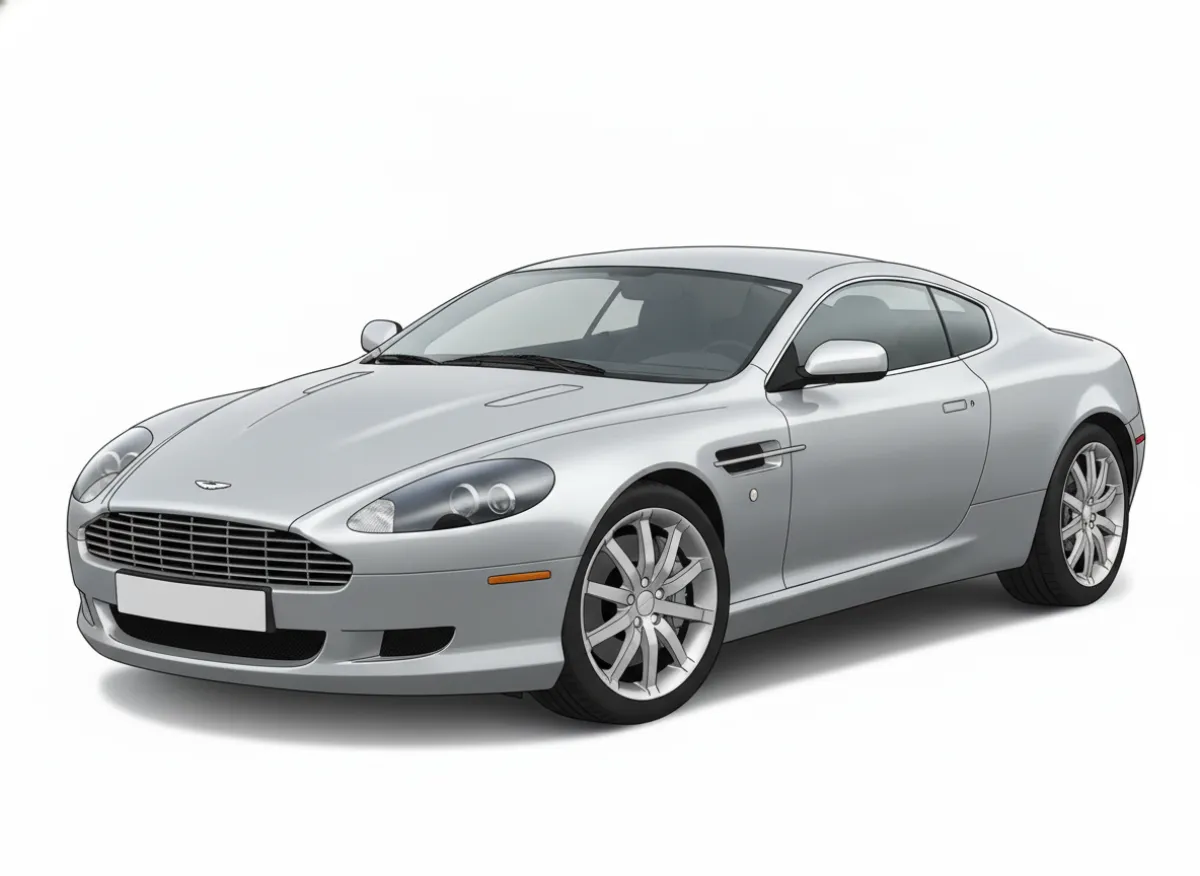
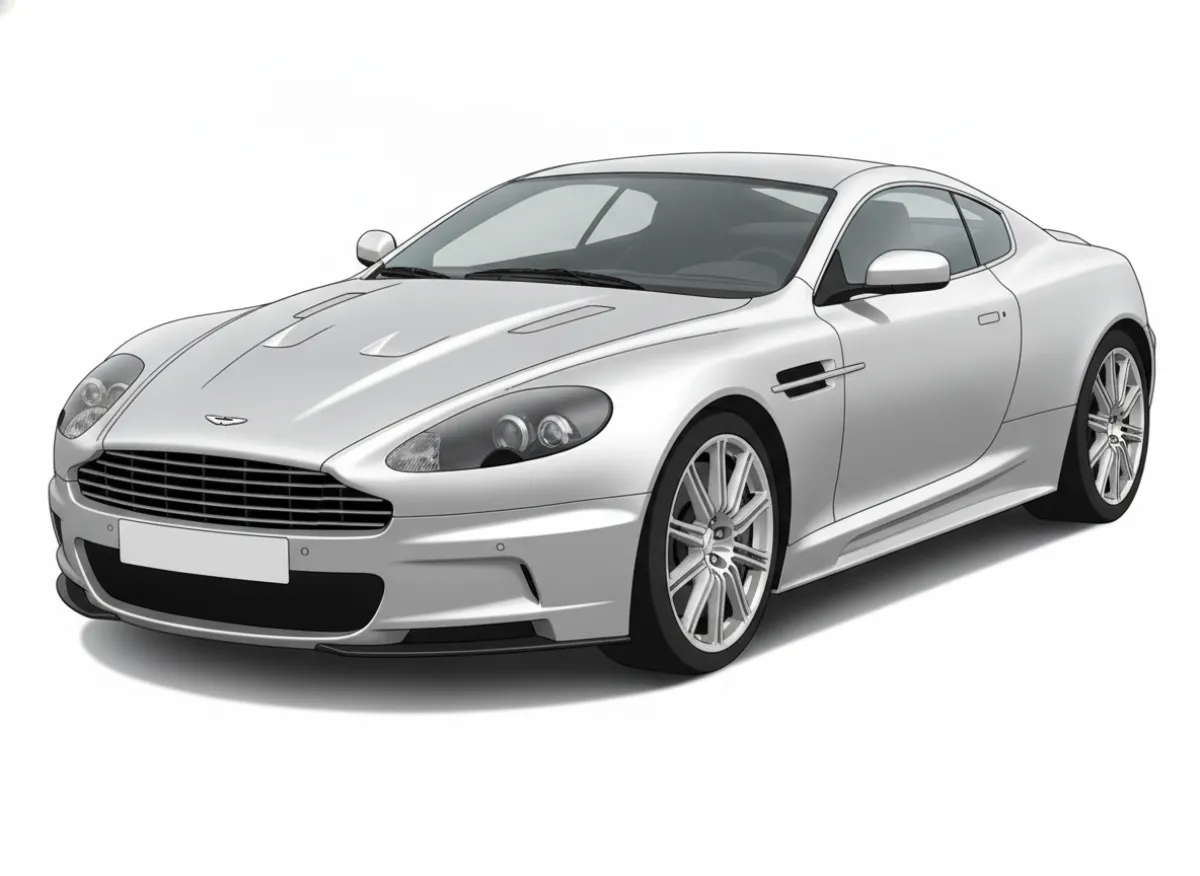
2000s
5 launched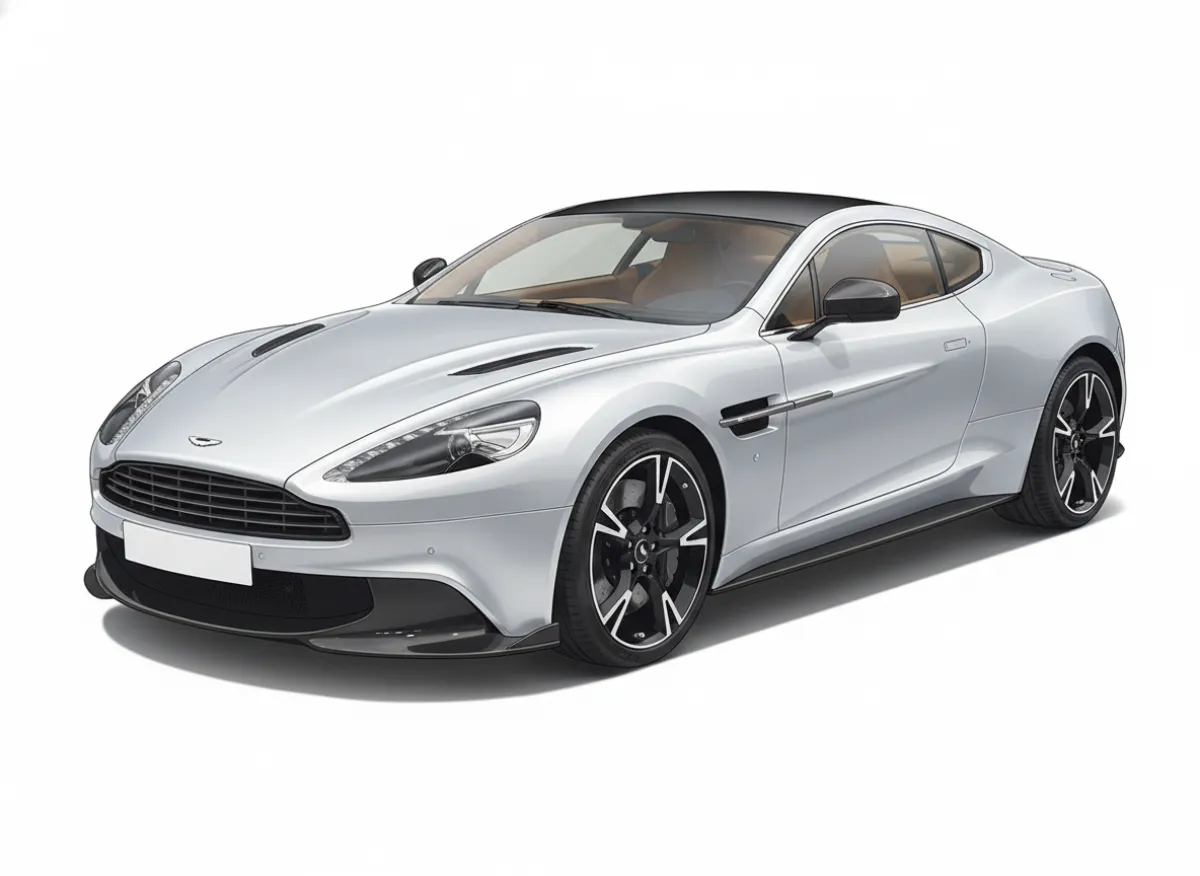
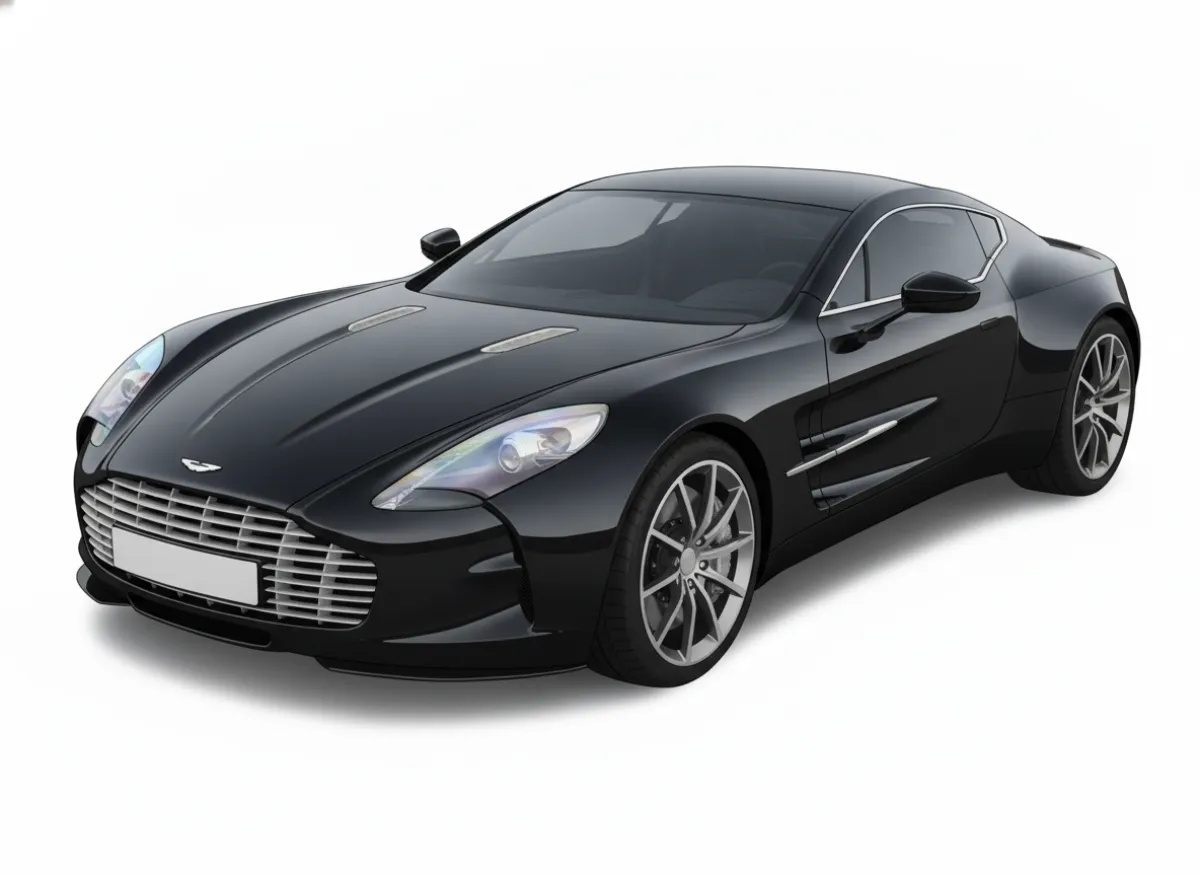
2010s
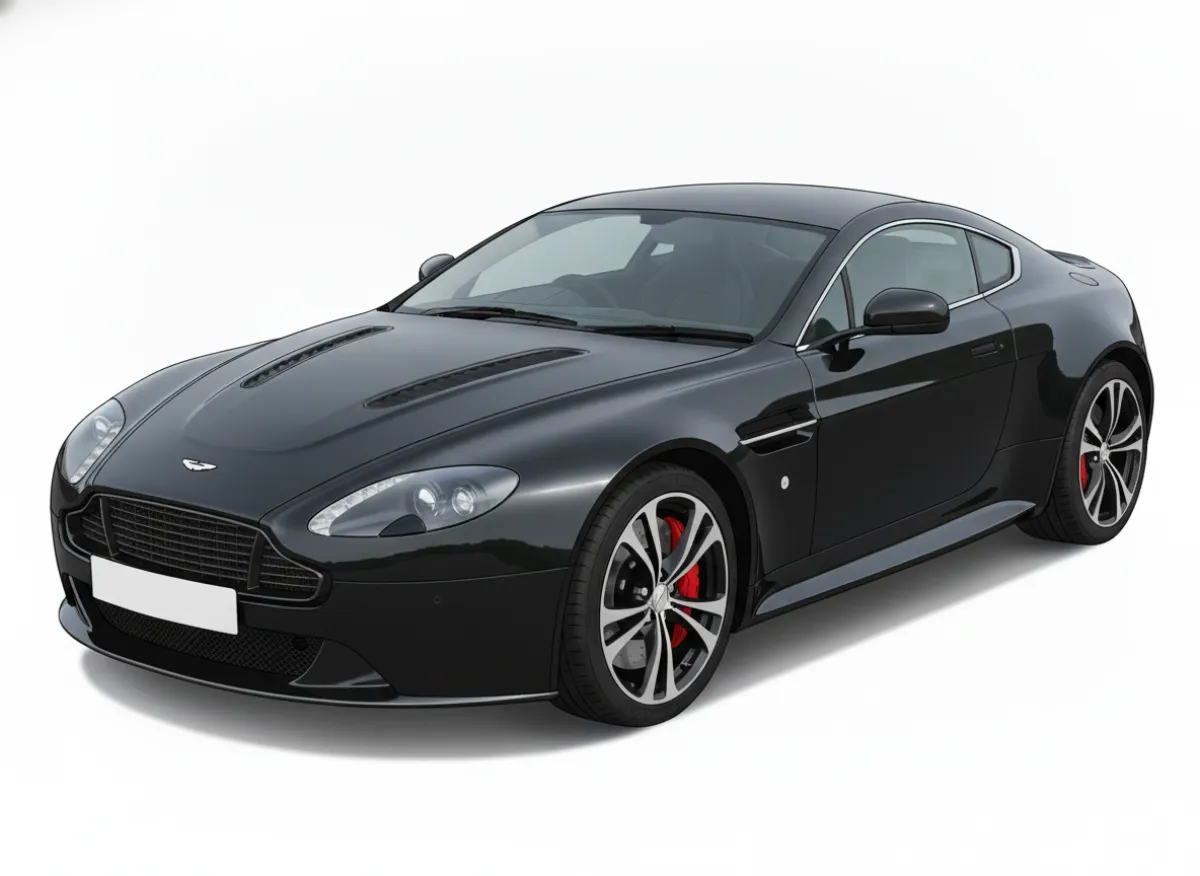
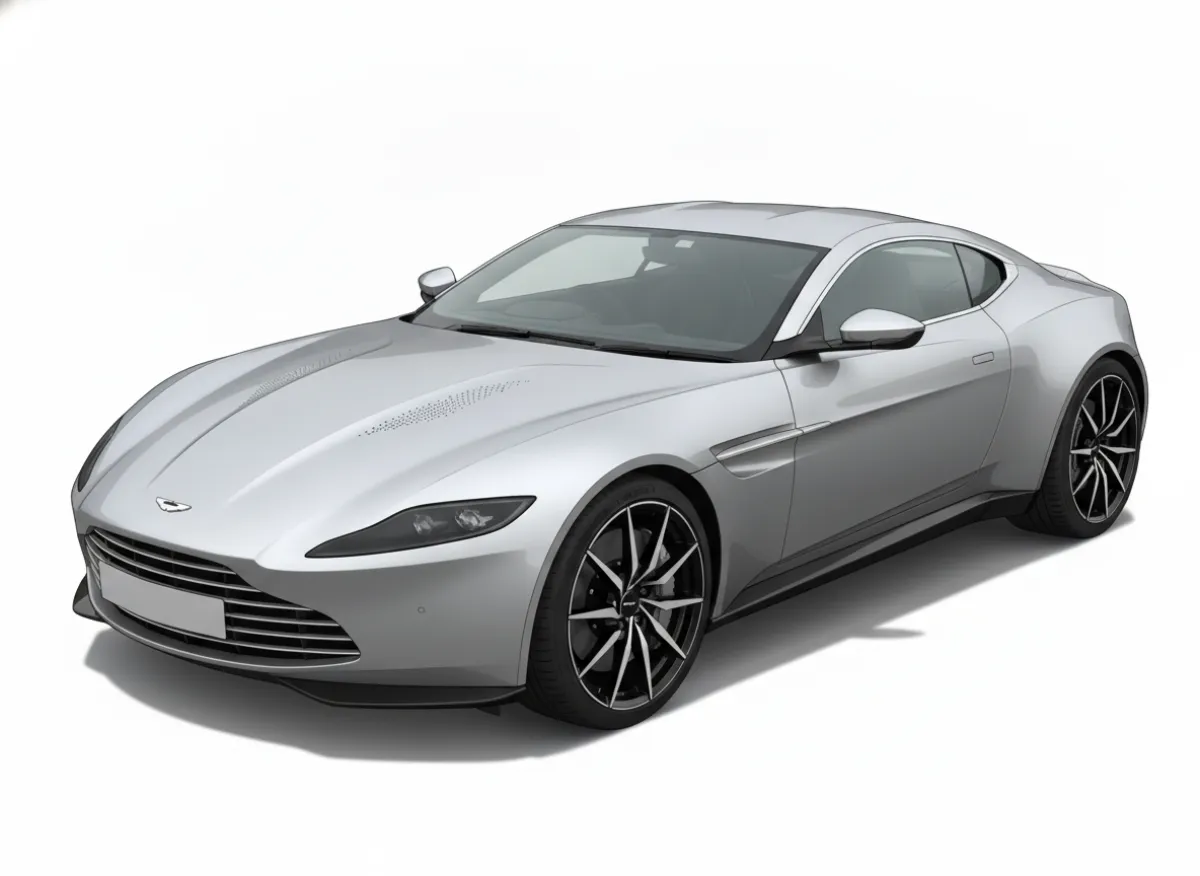
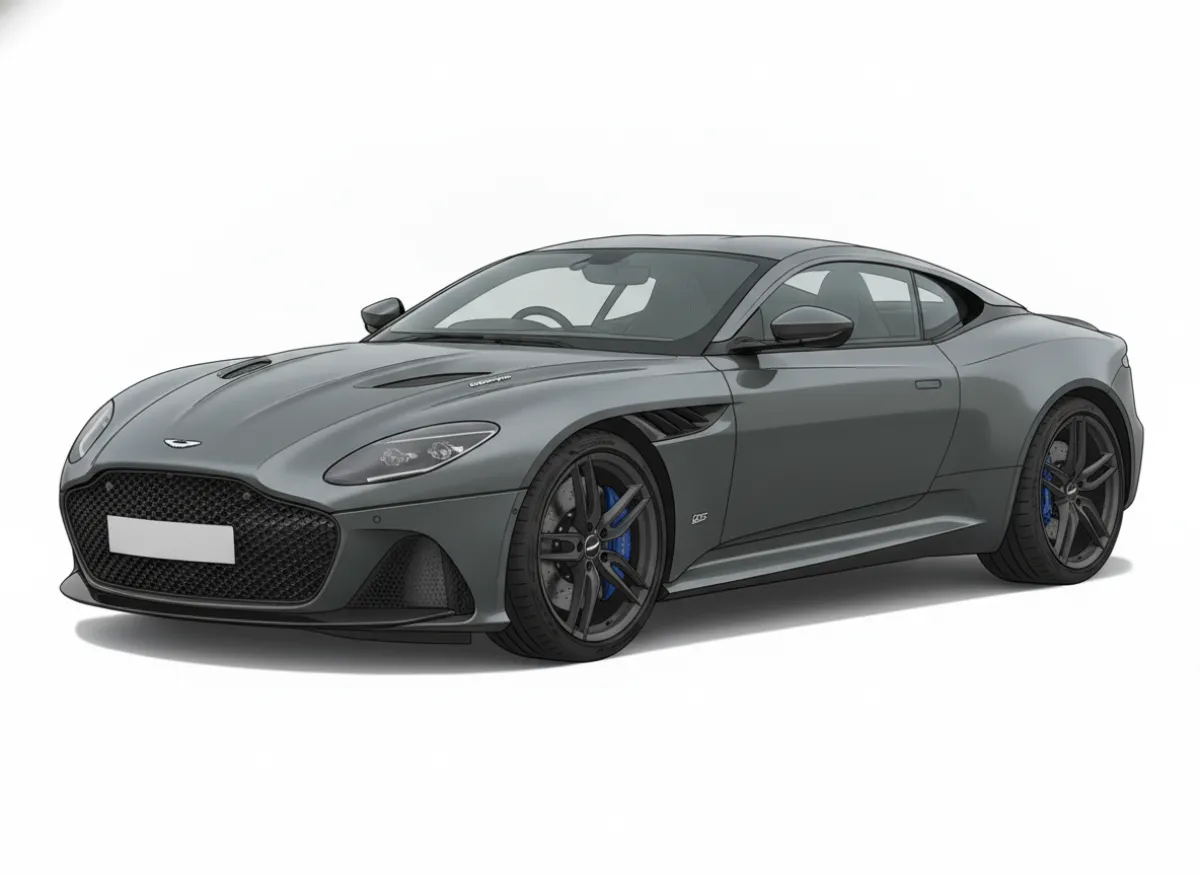
11 launched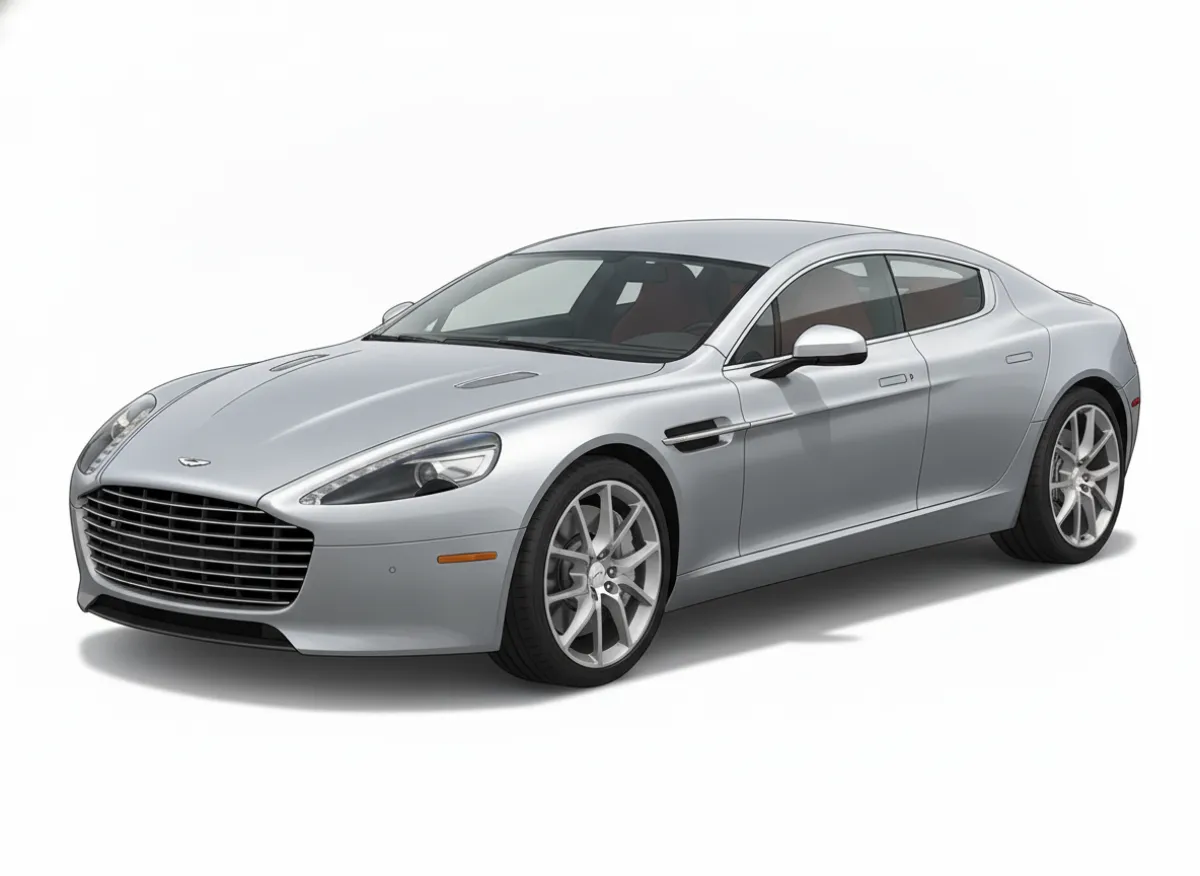
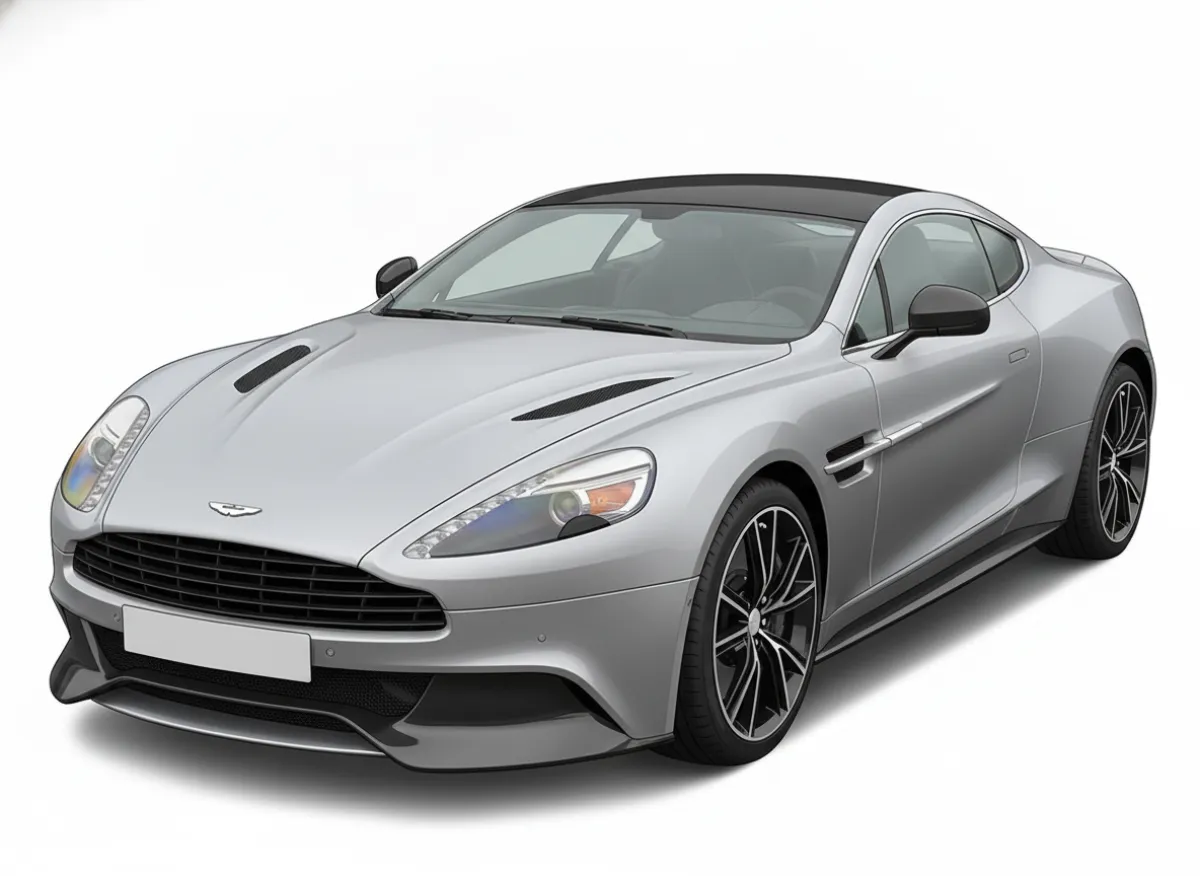
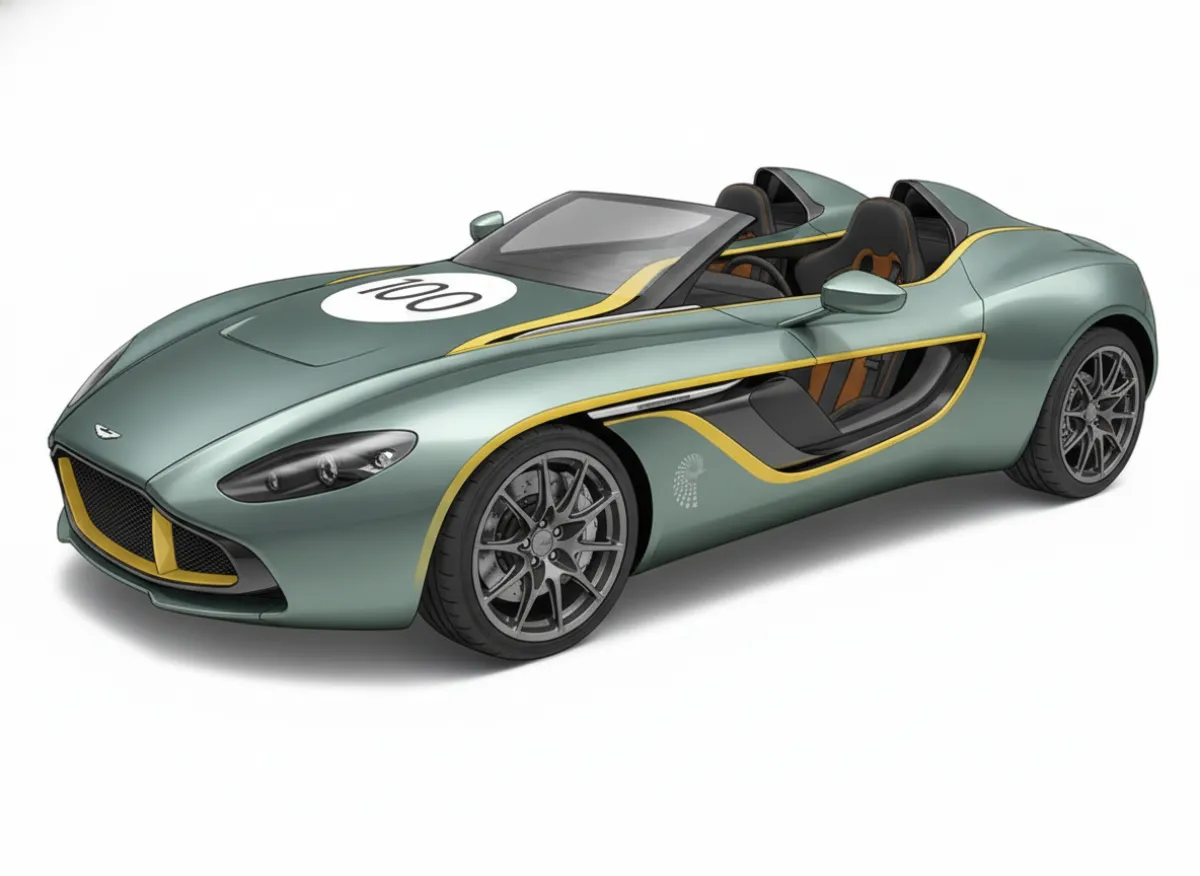
2020s
5 launched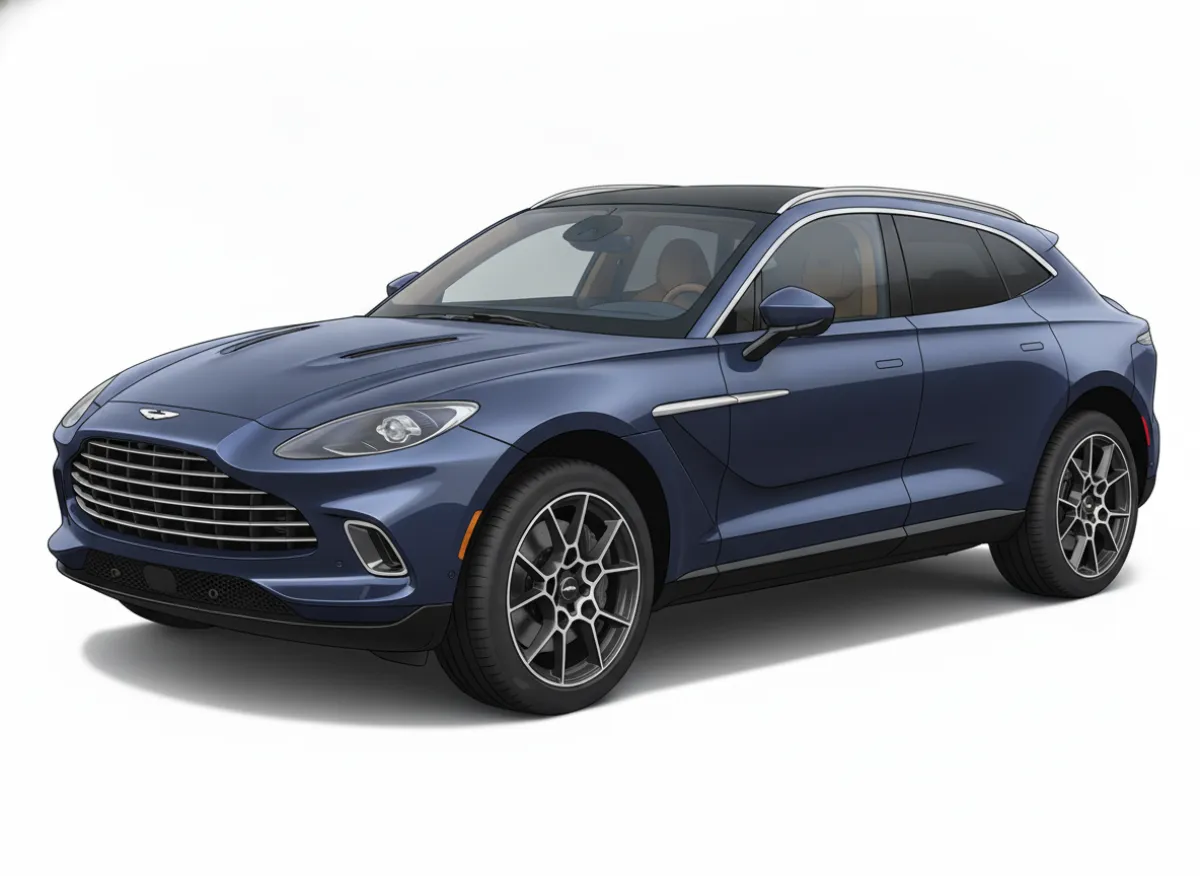
History
1913–1926
Bamford & Martin and the first cars
Lionel Martin and Robert Bamford set up Bamford & Martin in London in 1913 as motor dealers, selling Singer cars and servicing other makes. Martin raced specials at the Aston Hill climb near Aston Clinton, and the first car to carry the Aston Martin name combined a Coventry-Simplex engine with a 1908 Isotta Fraschini chassis. The war held up production; the first car of the firm's own was finished in March 1915 and the machinery was then sold off.
After the war the business restarted in Abingdon Road, Kensington. Bamford left in 1920 and money from the racing driver Louis Zborowski kept it going, but the company went bankrupt in 1924. Lady Charnwood bought it and put her son John Benson on the board. It failed again in 1925, and in 1926 the works closed and Lionel Martin left.
1926–1947
Bertelli, Feltham and the Sutherlands
In October 1926 the Birmingham engineers W. S. Renwick and A. C. 'Bert' Bertelli, backed by investors including Lady Charnwood, bought the business and formed Aston Martin Motors Ltd, which moved to Feltham in Middlesex. Bertelli designed every Aston Martin built from 1926 to 1937, and his sporting models, the International and the Le Mans among them, were raced by works teams. Money was short throughout: a new company, Aston Martin Ltd, was formed under the chairmanship of Sidney Whitehouse in 1929, and Lance Prideaux-Brune put in funds in 1931 and carried the firm through 1932.
In March 1933 Sir Arthur Sutherland bought out Prideaux-Brune and became chairman, with his son Gordon Sutherland as joint managing director. The company turned towards road cars from 1936 and had built about 700 before the Second World War stopped car production and the works switched to aircraft parts.
1947–1972
David Brown and the DB cars
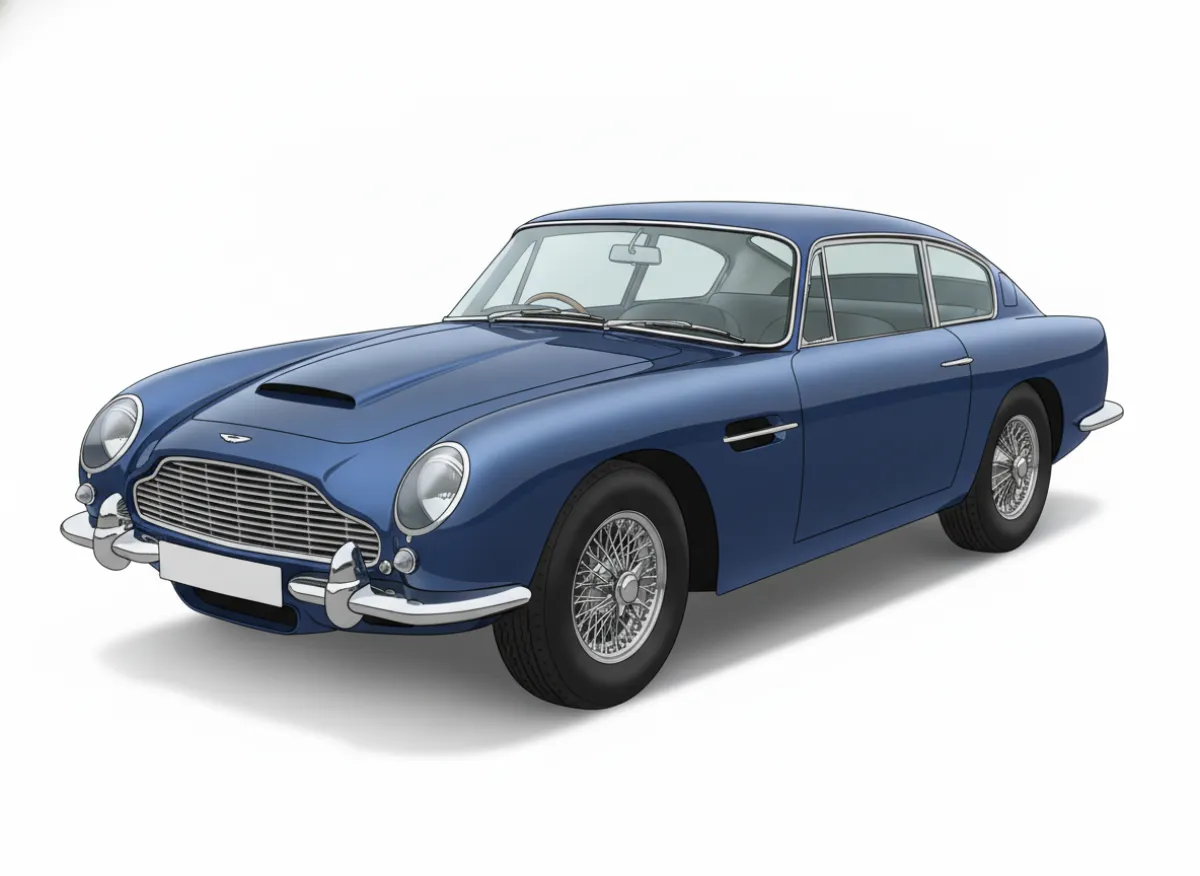
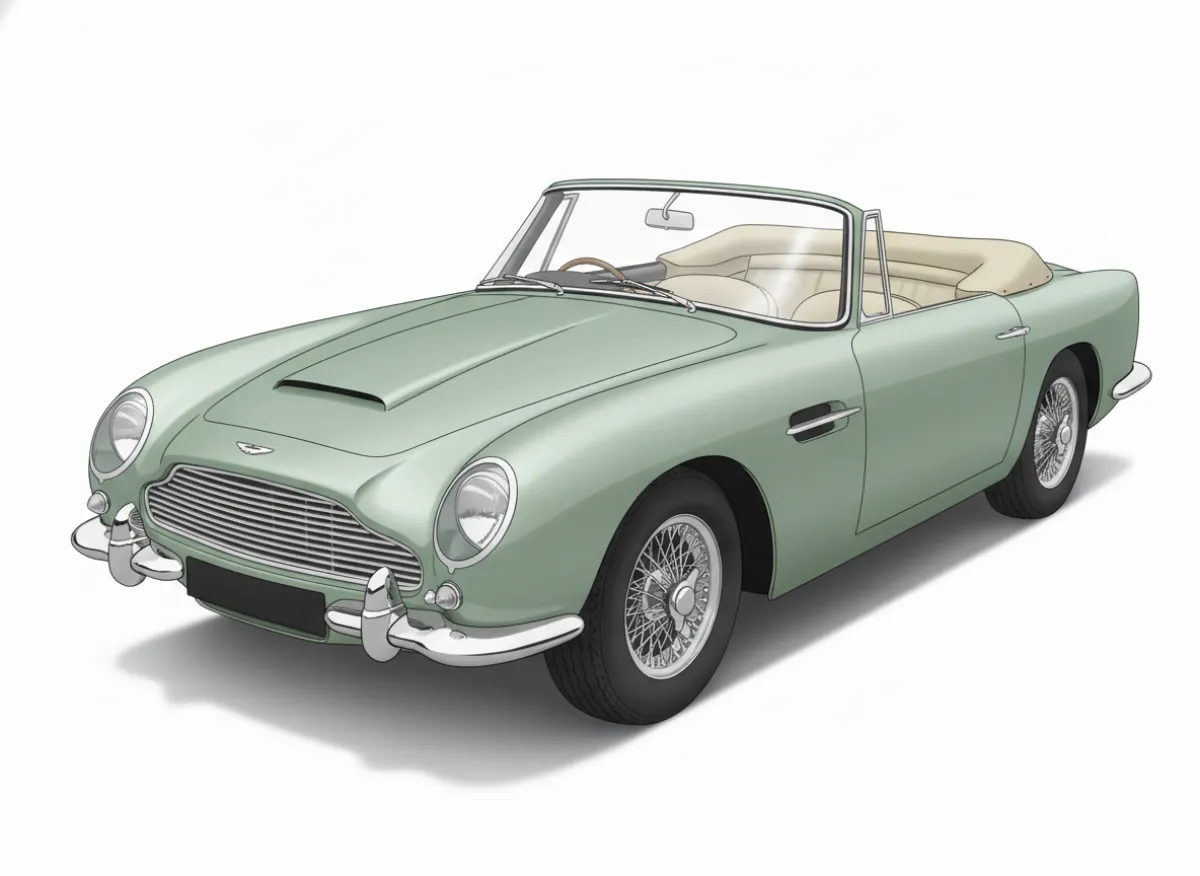
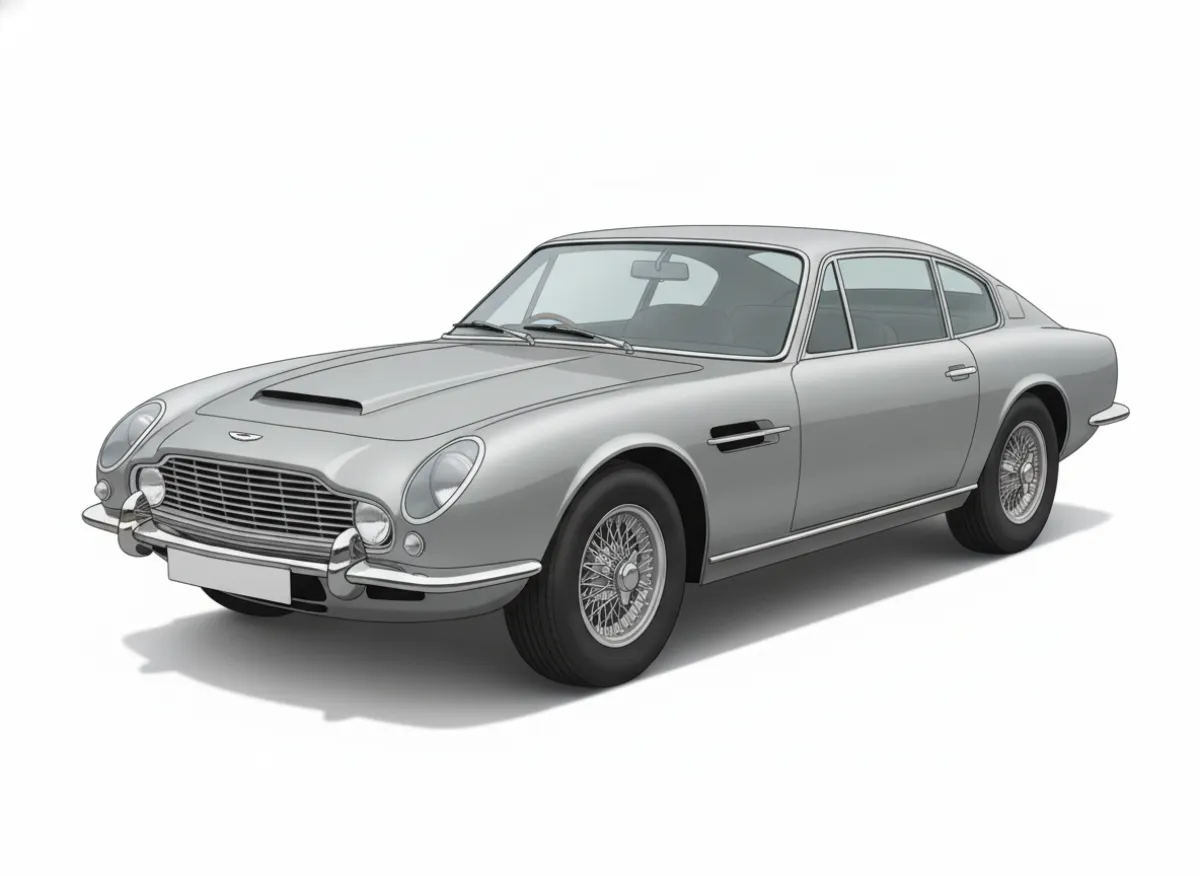
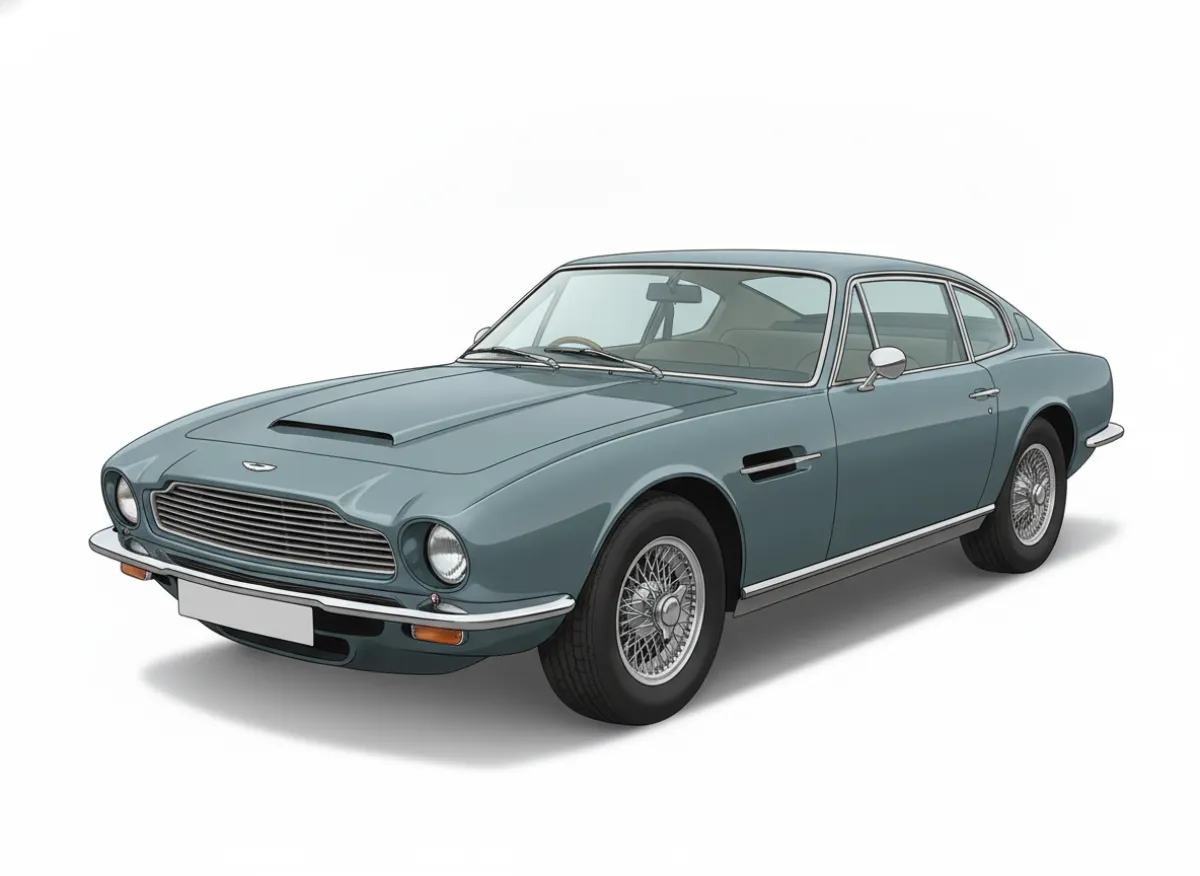
In 1947 the Huddersfield gear and machine-tool maker David Brown bought Aston Martin and, separately, Lagonda, chiefly for its W. O. Bentley-designed six-cylinder engine. The two marques were run together, and the cars he sponsored carried his initials: the DB2 of 1950, the DB4 of 1958, the DB5 of 1963 and the DB6 of 1965. Brown bought the coachbuilder Tickford in 1955, and production moved to Newport Pagnell, which built Aston Martins until July 2007.
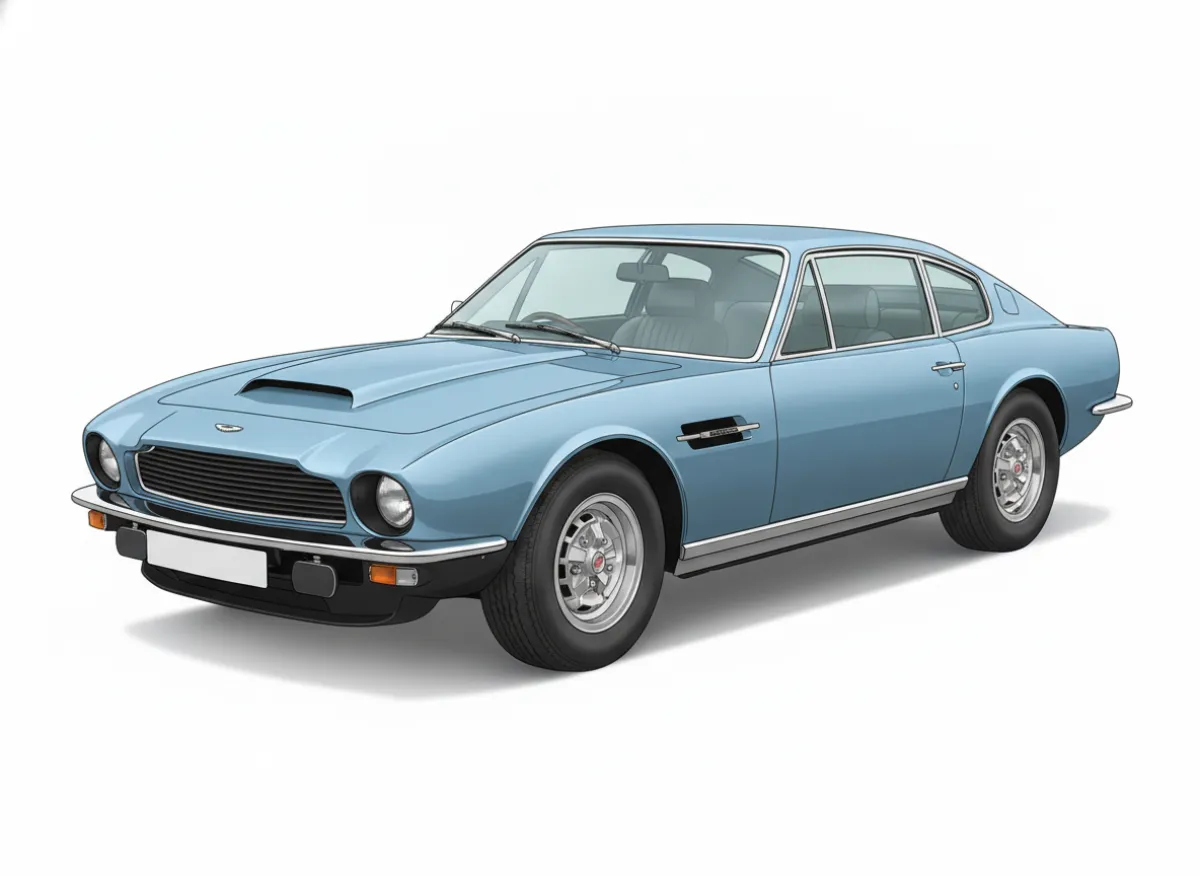
The DB5's part in the James Bond film Goldfinger (1964) made it the most famous car the company ever built, and a DBR1 won the Le Mans 24 Hours outright in 1959. The larger DBS arrived in 1967 and the first Aston Martin V8 engine in 1969.
1972–1980
Sale, receivership and the Sprague–Curtis years
In February 1972 David Brown cleared the company's debts and sold it for £101 to Company Developments, a Birmingham investment group chaired by William Willson. Recession, a shortage of working capital and the cost of meeting US emissions rules followed, and the company went into receivership at the end of 1974.
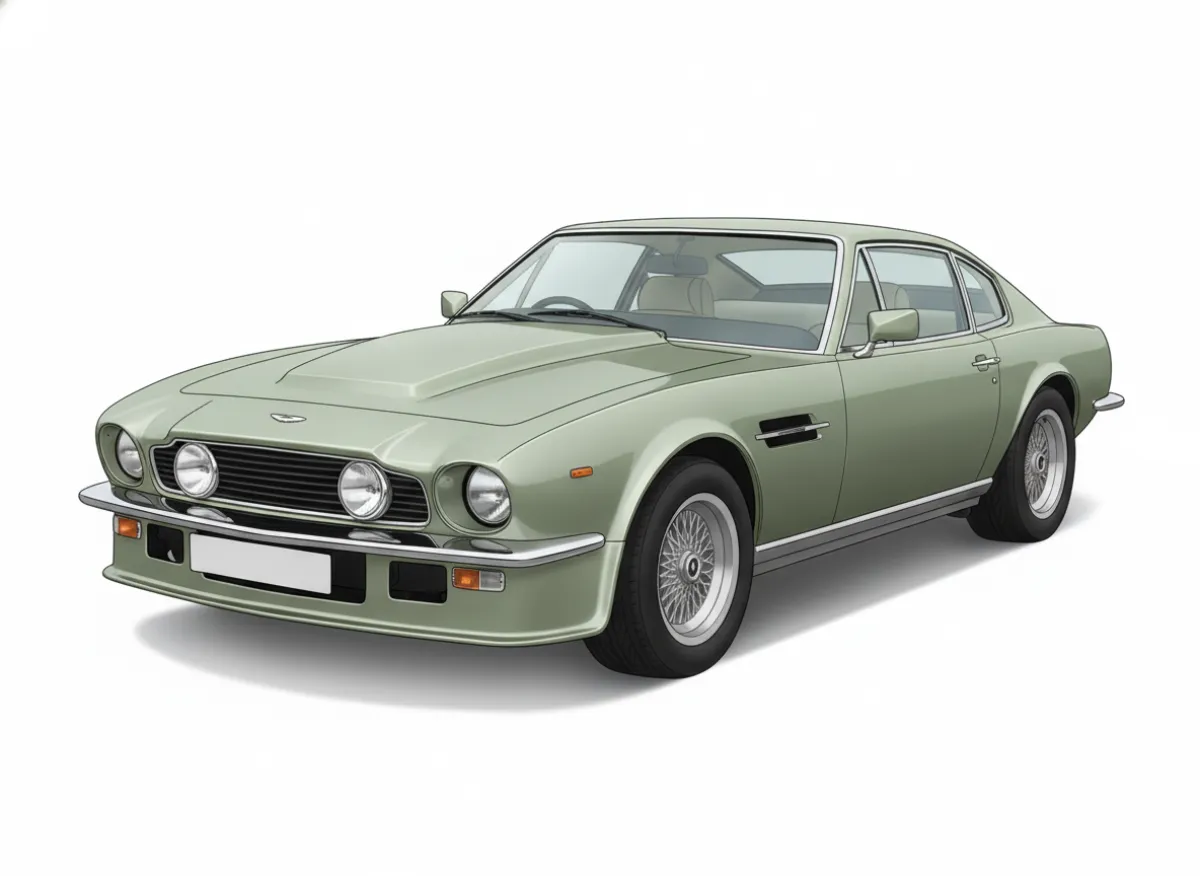
In 1975 the receiver sold the business for about £1.05 million to the North American investors Peter Sprague and George Minden, with Jeremy Turner. It restarted as Aston Martin Lagonda (1975) Ltd with a much smaller workforce, building around five cars a week in 1976. Further capital came from the British industrialists Alan Curtis and Denis Flather; Curtis took over as managing director in 1977, the year the V8 Vantage appeared, but volumes remained tiny.
1980–1987
Gauntlett, Livanos and the road to Ford
In 1980 Victor Gauntlett's Pace Petroleum and Tim Hearley's CH Industrials each bought a minority stake, and from the start of 1981 the two companies owned Aston Martin Lagonda between them, with Gauntlett as executive chairman. Demand was close to collapse: only 30 production cars were built in 1982.
When Pace was sold in 1983, Gauntlett sold his holding to Peter Livanos, who invested through ALL Inc.; by 1984 the Livanos family controlled the company and Gauntlett again held 25%. A deal that year valued the business at £2 million, and the company built its 10,000th car the same year.
1987–2007
The Ford years
Ford bought 75% of Aston Martin in September 1987 and the remaining shares in 1994. Walter Hayes took over as executive chairman from Gauntlett in 1991, and Ford opened a new plant at Bloxham in 1994 to build the DB7, launched the year before. The company built a record 700 cars in 1995.
Ulrich Bez, a former Porsche engineer, became chief executive in July 2000. Ford funded a purpose-built headquarters and factory at Gaydon, which opened in 2003 alongside the DB9 and its new 'VH' architecture; V8 Vantage production began in 2006. Annual sales climbed from fewer than 200 cars a year in the years before Ford arrived to a peak of more than 7,000 in 2007. Newport Pagnell closed in July 2007.
2007–2018
Independent again: consortium, Investindustrial and Daimler
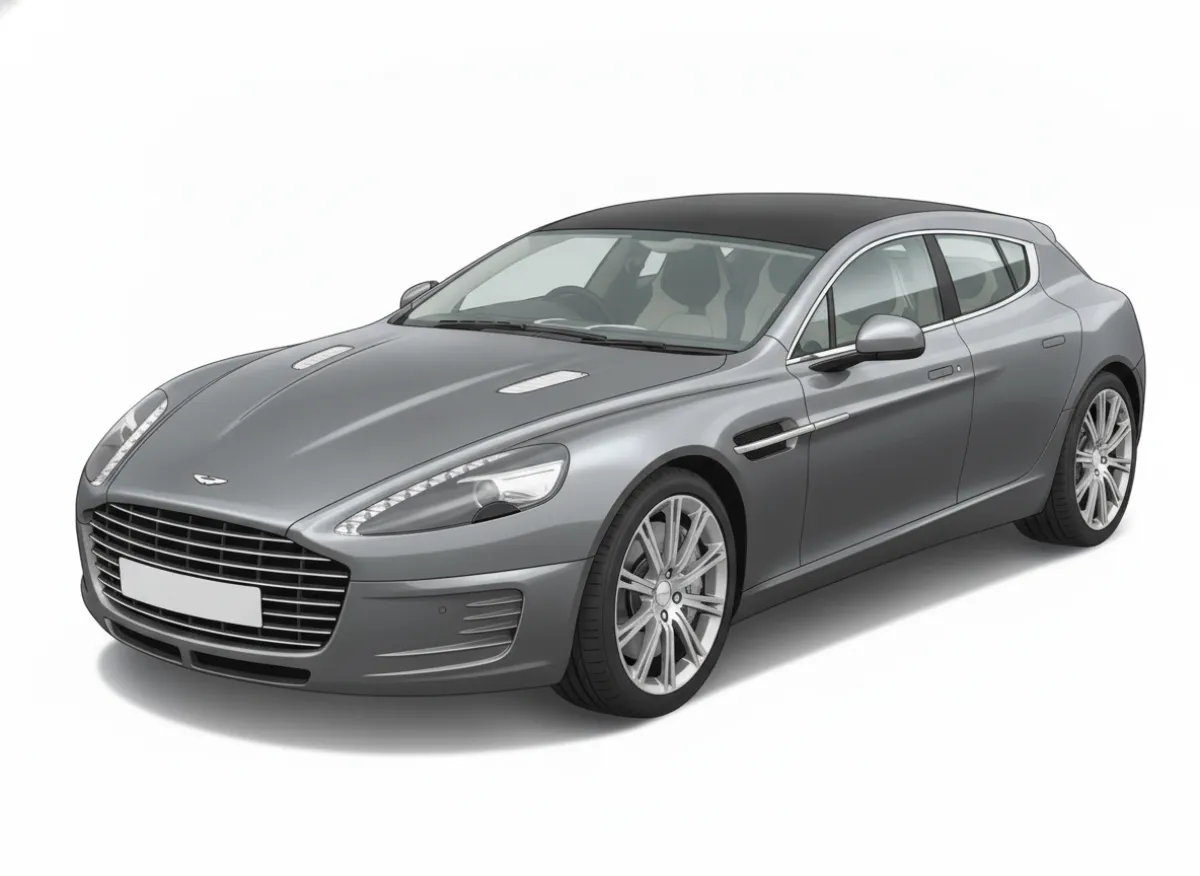
On 12 March 2007 Ford agreed to sell Aston Martin to a consortium led by David Richards (who invested personally, not through Prodrive) with the collector John Sinders and two Kuwaiti investors, Investment Dar and Adeem Investment, keeping a £40 million stake of its own. The 2008 recession hit hard: sales fell, and in December 2008 the company announced it would cut its workforce from 1,850 to 1,250. The Rapide saloon, built under contract by Magna Steyr in Graz from 2010, and a new Vanquish in 2012 extended the range.
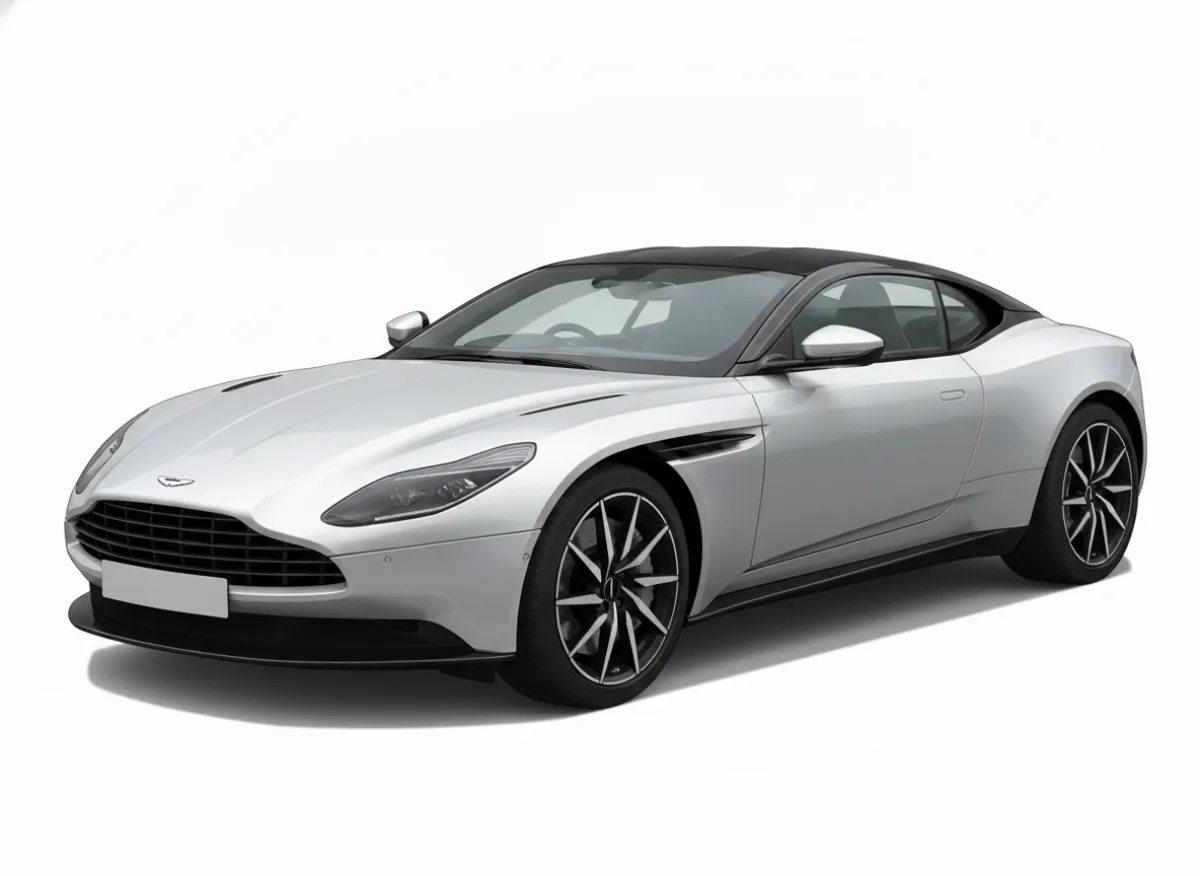
In December 2012 the Italian private-equity group Investindustrial agreed to take a 37.5% stake for £150 million of new capital, completed in 2013. In December 2013 Daimler agreed to supply Mercedes-AMG engines and electrical systems in return for a non-voting stake of just under 5%. Andy Palmer became chief executive in 2014 and launched a 'Second Century Plan' of one or two new models or derivatives a year; its first product, the DB11, arrived in 2016, and the company returned to profit in 2017.
2018–now
Listing, Stroll and new shareholders
Aston Martin Lagonda Global Holdings plc was listed on the London Stock Exchange on 3 October 2018. Wholesales and revenue both fell by about 9% in 2019, and in January 2020 a consortium led by Lawrence Stroll, Yew Tree, agreed to invest £182 million as part of a £500 million fund-raising; by April 2020 it held 25% and Stroll was executive chairman. Palmer left in May 2020 and the DBX, the first SUV, built at a new plant at St Athan in Wales, became the best-selling model.
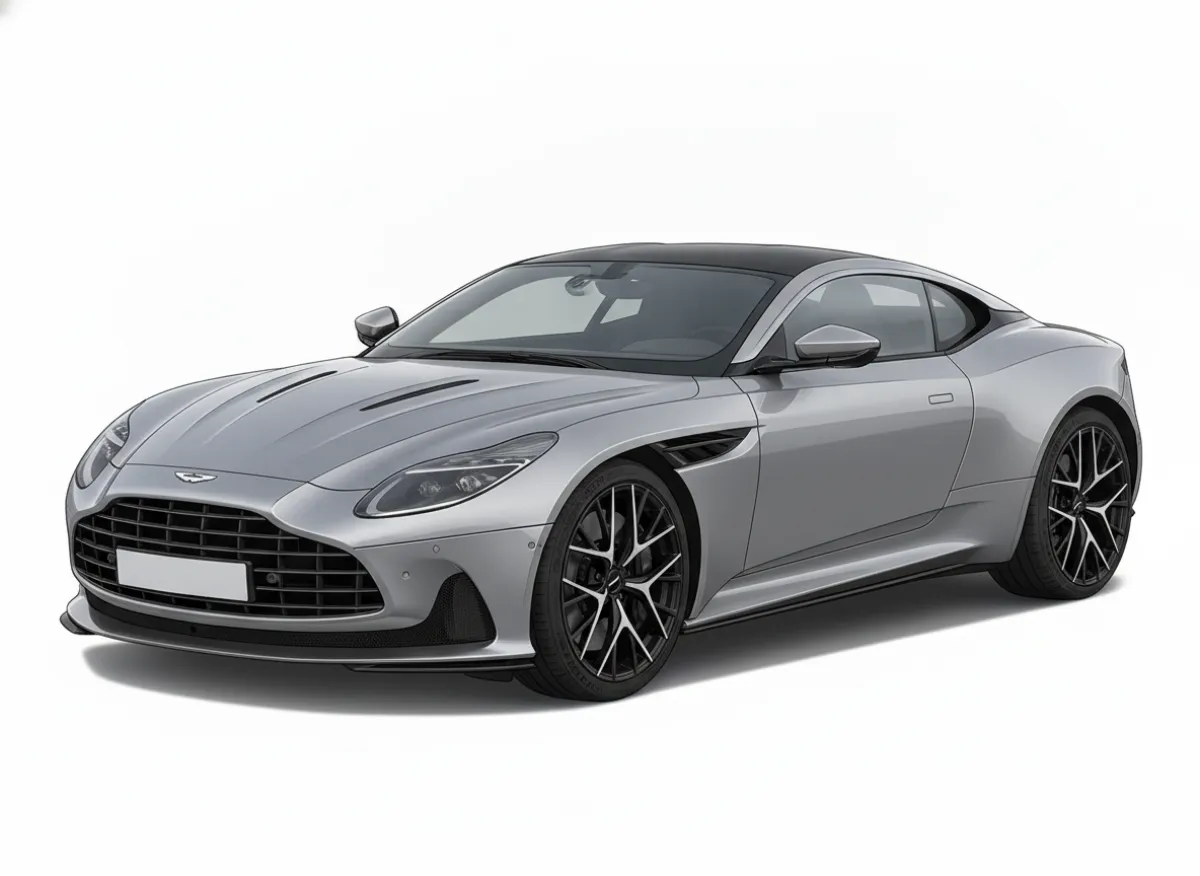
Further capital raisings brought in Saudi Arabia's Public Investment Fund (18.7% in 2022) and Geely (7.6% in 2022, about 17% from 2023), while Mercedes-Benz's holding rose under a 2020 technology agreement and was later diluted. Chief executives changed quickly: Tobias Moers (2020–22), Amedeo Felisa (2022–24) and Adrian Hallmark from September 2024. Wholesale volumes peaked at 6,620 in 2023 and fell to 5,448 in 2025, when revenue was £1,257.7 million and the company announced job cuts of up to a fifth of its workforce.
Milestones
- 1913
Lionel Martin and Robert Bamford set up Bamford & Martin in London.
- 1915
First car of the firm's own completed (March).
- 1922
Team cars built for the French Grand Prix, the marque's racing debut.
- 1924
Bamford & Martin goes bankrupt and is bought by Lady Charnwood.
- 1926
Renwick and Bertelli form Aston Martin Motors Ltd (October); production moves to Feltham.
- 1933
Sir Arthur Sutherland buys control (March).
- 1947
David Brown buys Aston Martin and Lagonda.
- 1950
DB2 announced (April).
- 1955
David Brown buys Tickford; Newport Pagnell becomes the company's home.
- 1958
DB4 launched.
- 1959
DBR1 wins the Le Mans 24 Hours outright.
- 1963
DB5 launched; it appears in the Bond film Goldfinger the following year.
- 1972
David Brown sells the company to Company Developments for £101 (February).
- 1974
Company goes into receivership at the end of the year.
- 1975
Receiver sells the business to Peter Sprague and George Minden; it restarts as Aston Martin Lagonda (1975) Ltd.
- 1981
Pace Petroleum and CH Industrials become joint owners; Victor Gauntlett executive chairman.
- 1982
Production falls to 30 cars.
- 1984
10,000th car built.
- 1987
Ford buys 75% (September).
- 1993
DB7 launched; built at a new Ford-funded plant at Bloxham from 1994.
- 1994
Ford takes 100% ownership.
- 2000
Ulrich Bez becomes chief executive (July).
- 2003
Gaydon headquarters and factory open; DB9 launched.
- 2007
Ford sells control to the Richards–Sinders–Investment Dar–Adeem consortium (12 March); Newport Pagnell production ends (July).
- 2010
Rapide production begins at Magna Steyr, Graz.
- 2012
Investindustrial agrees to take 37.5% (6 December).
- 2013
Centenary; Daimler technical partnership and non-voting stake agreed (December).
- 2016
DB11 launched, the first new model of the Second Century Plan.
- 2018
Aston Martin Lagonda Global Holdings plc listed in London (3 October); record wholesales of 6,441.
- 2020
Lawrence Stroll's Yew Tree consortium invests and Stroll becomes executive chairman; DBX deliveries begin from St Athan.
- 2021
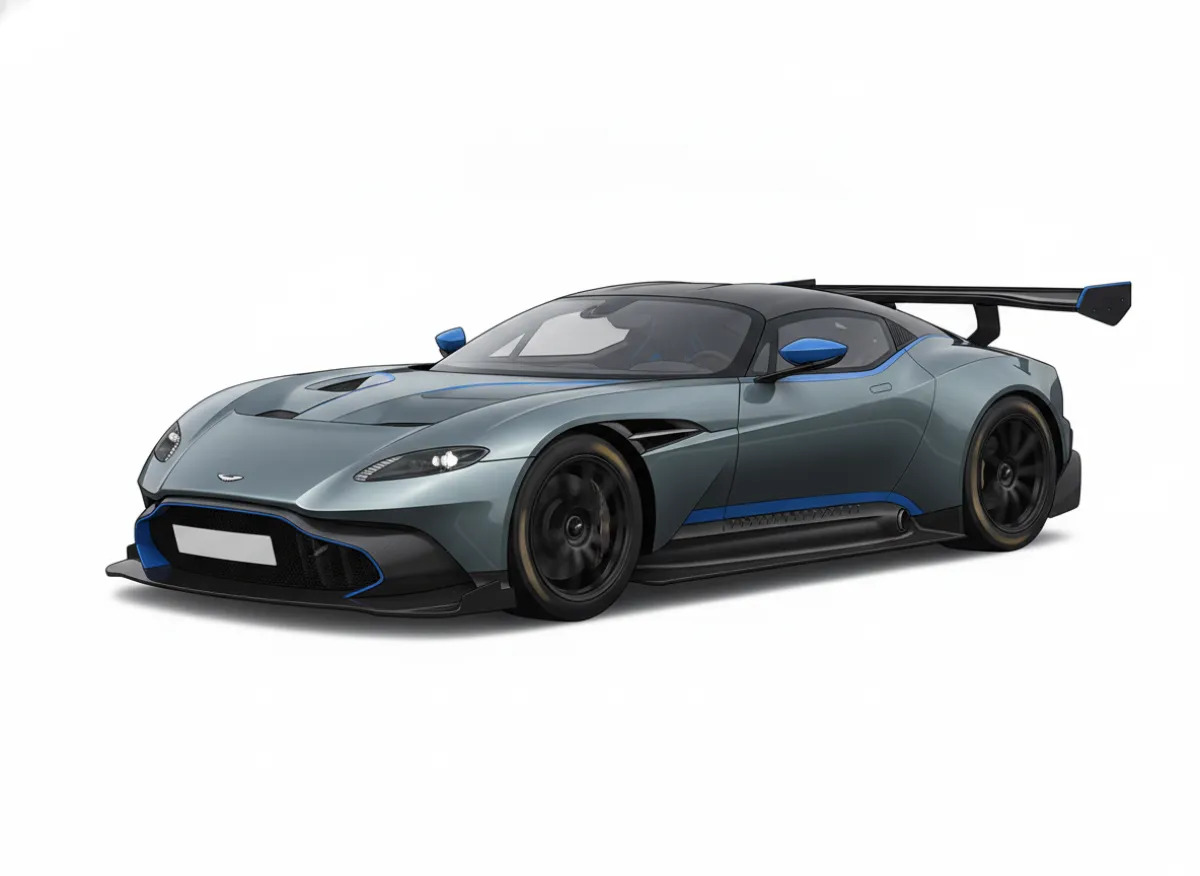
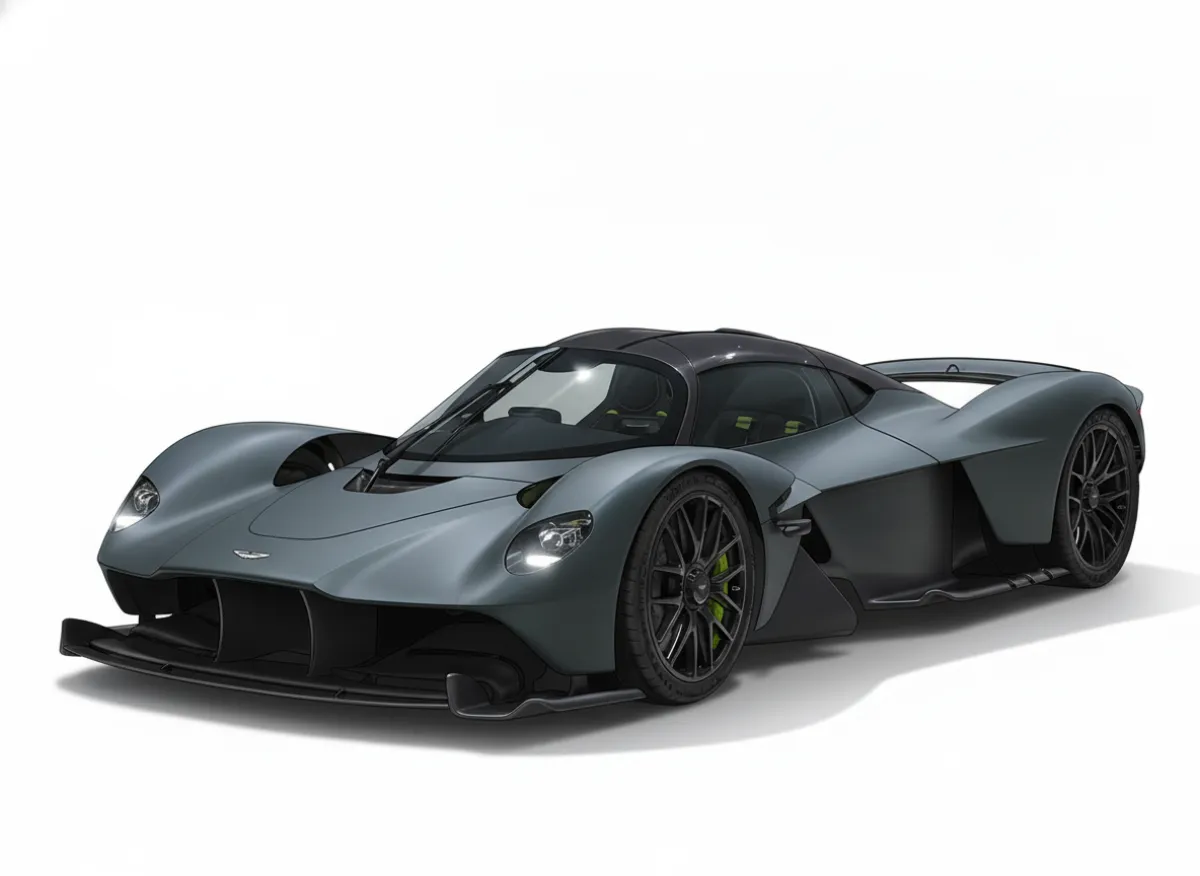
First Valkyrie hypercars delivered; Aston Martin name returns to Formula One.
- 2022
Public Investment Fund and Geely become major shareholders.
- 2023
DB12 launched; wholesale volumes reach 6,620, the highest in the listed company's reporting.
- 2024
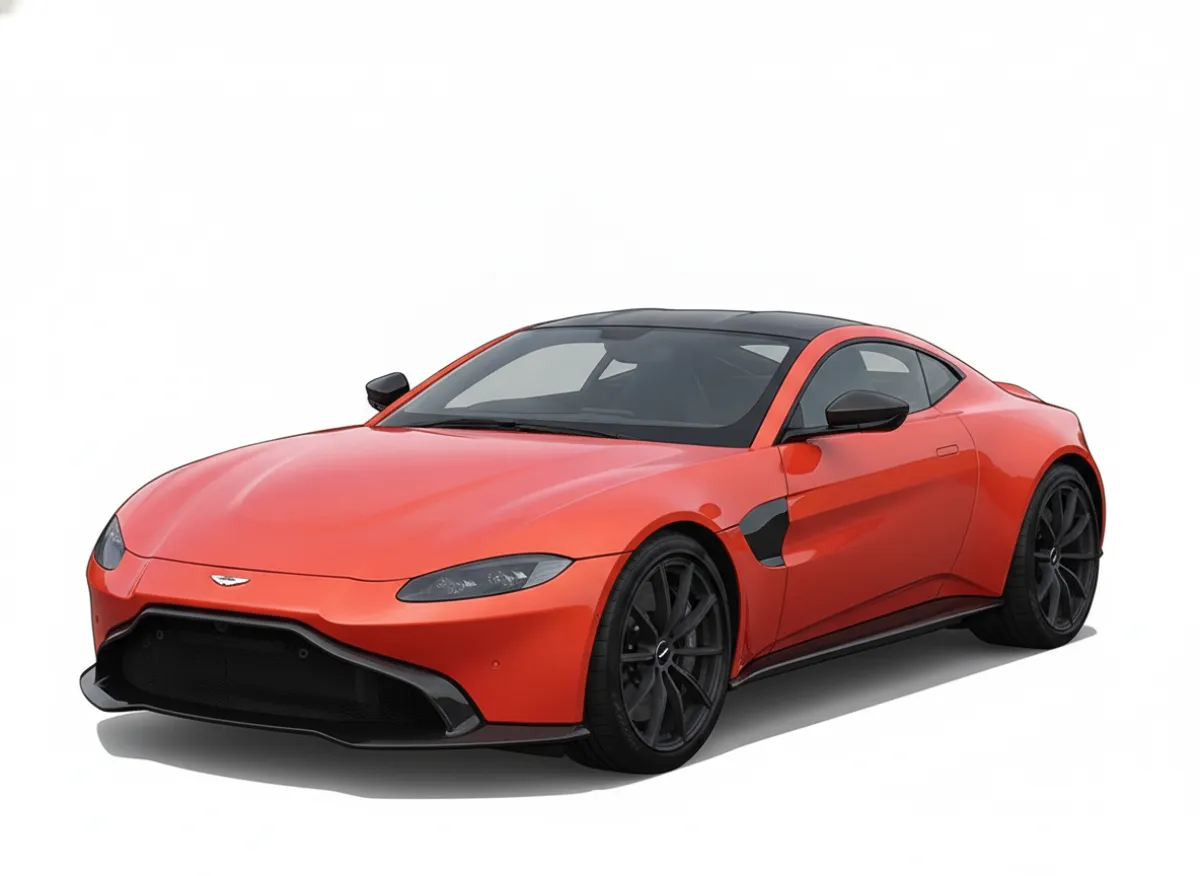
New Vantage and third-generation Vanquish launched; Adrian Hallmark becomes chief executive (1 September).
- 2025
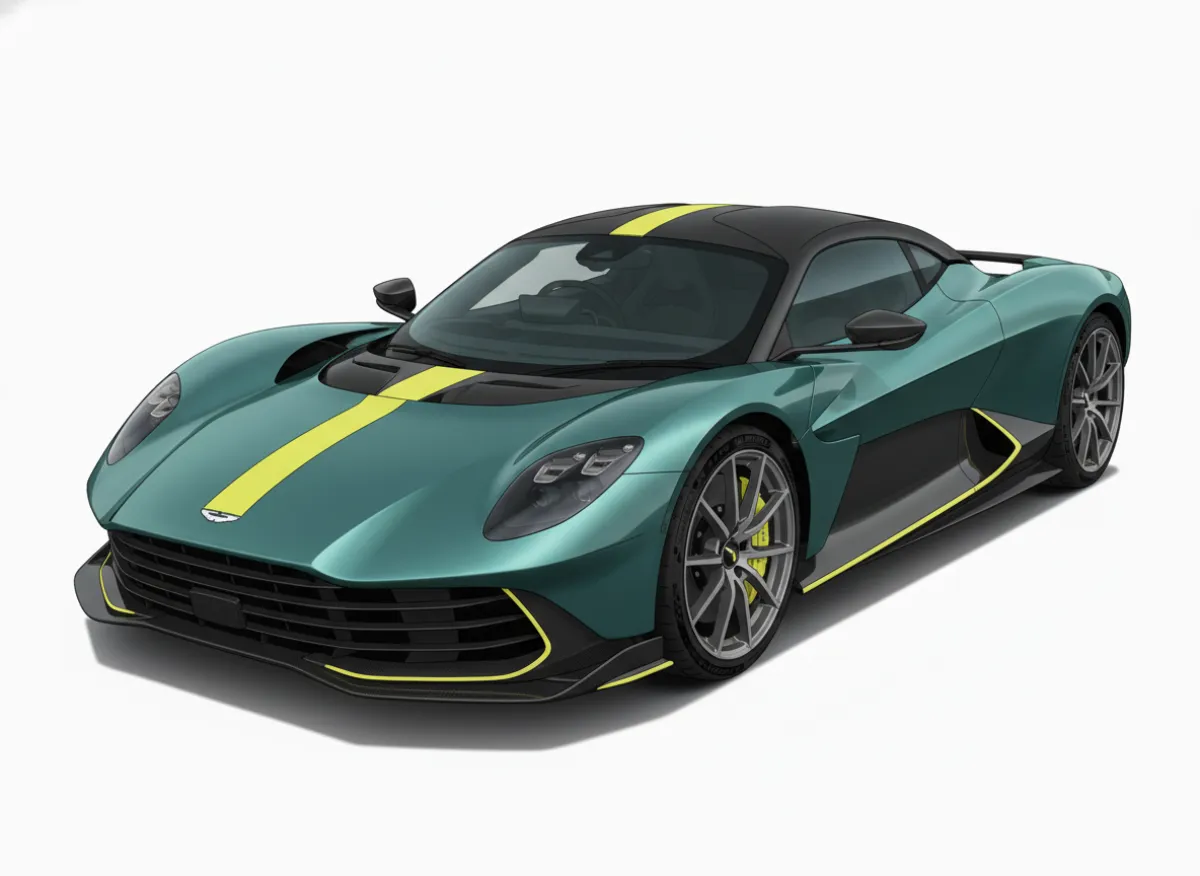
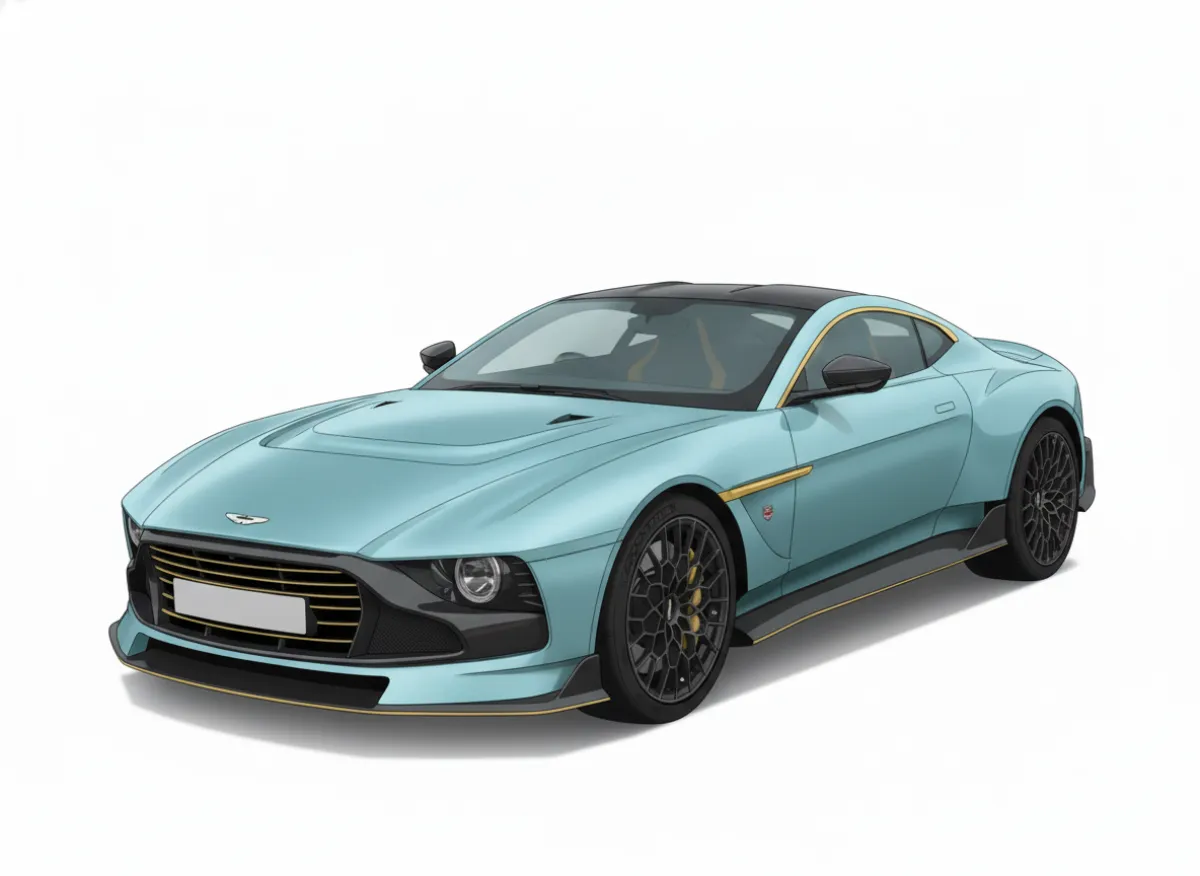
First Valhalla deliveries (152 in the fourth quarter); Yew Tree's stake rises to 33%.